










What is SMS Betting?
SMS betting allows users to place bets using text messages instead of a web or mobile app interface. A user registers their phone number with a betting service and links it to their account. Once set up, they can send predefined commands via SMS to place bets.
Each message follows a structured format. For example, a user might send a code representing the event, the type of bet, and the stake amount. The system processes the message, validates the request, and confirms the bet via a reply SMS. Some platforms also allow users to check odds, view account balance, or receive alerts through text.
Editor’s note: Updated the article to cover recent market trends as of 2026, use cases and current best practices of SMS betting.
The value of SMS for Sports Betting and Gambling industry
SMS messages enable brands to have a direct channel of communication with their clients via their favorite devices. As a result, sports betting and gambling companies are able to attract, acquire, and retain customers thanks to this effective and affordable technique.
SMS offers significant advantages to the gambling industry:
- High efficiency – SMS has 98% open rate
- Multipurpose – Can be used for marketing, notifications, user verification, customer support, etc.
- Wider reach – Allows businesses to reach all customers, even those who are not using smartphones
- Improved security – Two-factor authentication (2FA) via SMS secures customers’ private information
Recent Gambling Industry Trends
According to recent market research, the gambling market continues to grow steadily, rising from $574.55 billion in 2025 to a projected $600.98 billion in 2026. By 2030, it is expected to reach $728.79 billion, supported by a 4.9% CAGR. This growth reflects stable demand, wider global participation, and the continued shift toward digital gambling channels.
Technology is a central growth driver. Smartphones, internet access, and digital payments have made gambling easier to access and use. Legalization in additional regions is opening new markets, while physical casinos continue to support offline and hybrid gambling models.
The strongest trend is the move toward online and mobile-first experiences. Live and in-game betting are gaining traction, while virtual reality and advanced digital platforms are creating more immersive casino-style environments. Operators are also using data analytics, stronger security, and responsible gambling tools to improve engagement and meet regulatory expectations.
Key Use Cases of SMS in Sports Betting and Gambling
Real-Time Engagement
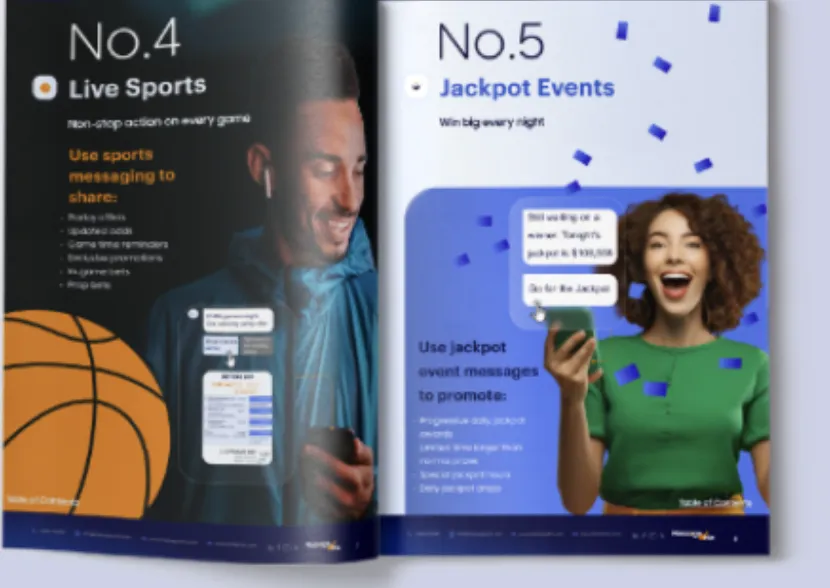
SMS enables immediate interaction during live events. Betting platforms can send odds updates, match status changes, or in-play betting prompts as events unfold. This keeps users engaged without requiring them to open an app. It is especially useful for time-sensitive bets where quick decisions are required.
Because SMS delivery is near-instant and does not depend on app push permissions, it provides a reliable fallback channel. Even users with limited connectivity or older devices can receive updates. Operators can also automate triggers based on event data feeds, ensuring messages are sent at precise moments, such as goals scored or odds shifts.
Personalized Promotions
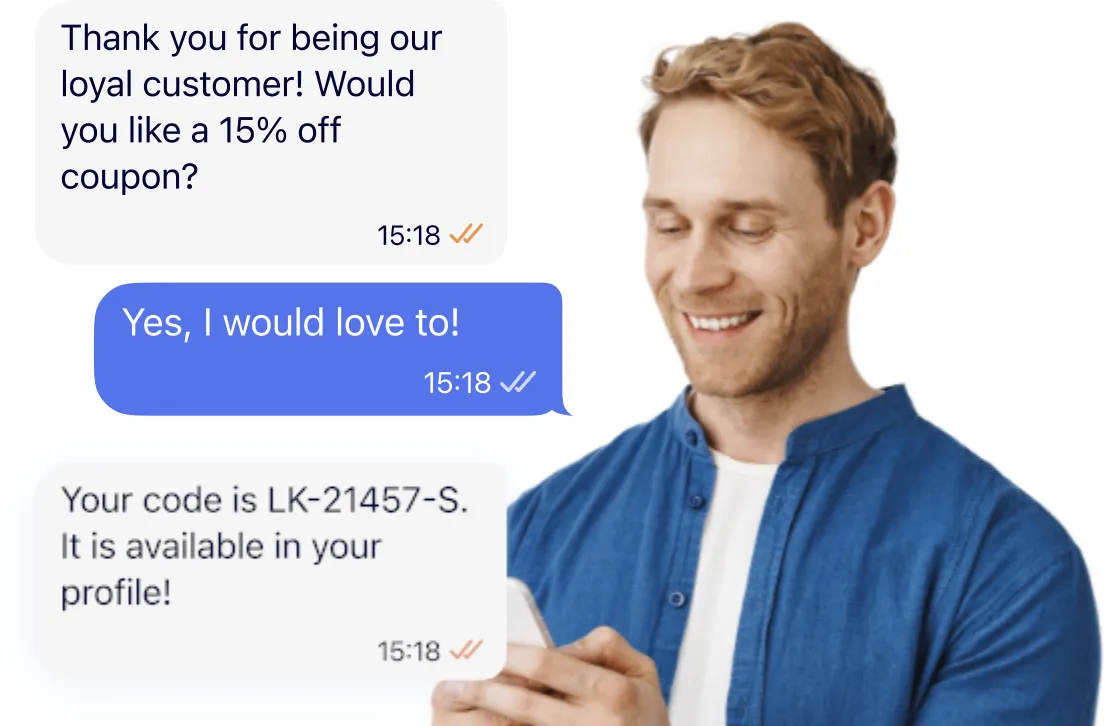
Operators can use customer data to send targeted offers via SMS. These may include free bets, deposit bonuses, or odds boosts based on user behavior. Personalization increases conversion rates because messages are relevant to the recipient’s preferences and betting history. Timing can also be optimized, such as sending offers before major events.
Segmentation plays a key role here. Users can be grouped by sport preference, betting frequency, or average stake size. This allows campaigns to be more specific, reducing message fatigue and improving ROI. SMS also supports short, clear calls to action, which helps drive immediate responses compared to longer email campaigns.
Player Lifecycle Marketing
SMS supports communication across all stages of the user lifecycle. For new users, it can deliver onboarding instructions and first-time offers. For active users, it maintains engagement through regular updates and incentives. For inactive users, it can trigger reactivation campaigns with tailored promotions to bring them back.
Automation systems often define lifecycle stages and attach SMS workflows to each stage. For example, a user who has not placed a bet in 7 days may receive a reminder, while a high-value user may receive exclusive offers. This structured approach ensures consistent communication without manual intervention.
Customer Support and Security
SMS is widely used for account-related communication. This includes two-factor authentication codes, password resets, and transaction confirmations. It provides a secure and direct channel that does not rely on internet access. Support teams can also use SMS to send quick responses or updates on user requests.
In addition, SMS can serve as a notification layer for critical account activity, such as large withdrawals or login attempts from new devices. This improves transparency and helps users react quickly to potential security issues. Compared to email, SMS has higher visibility, making it more effective for urgent alerts.
Responsible Gambling Communication
SMS can be used to promote responsible gambling practices. Platforms can send reminders about spending limits, session duration, or self-exclusion options. Alerts can notify users of unusual activity or excessive betting patterns. This helps operators meet regulatory requirements while supporting safer user behavior.
These messages can be triggered by predefined thresholds, such as rapid deposit frequency or extended betting sessions. SMS is effective here because it is direct and hard to ignore, increasing the likelihood that users will notice and act on the information. It also provides a simple way to share links to support resources or account control settings.
Best Practices for SMS Betting Success
Leverage Advanced Segmentation for Precision Targeting
Segmentation should go beyond basic demographics. Group users based on betting behavior, preferred sports, deposit patterns, and activity frequency. This allows operators to send highly relevant messages that match user intent. For example, frequent live bettors can receive in-play alerts, while casual users may respond better to simple pre-match offers.
Well-defined segments reduce unnecessary messaging and improve engagement rates. It also helps control costs, since SMS campaigns are typically priced per message. Accurate targeting ensures that each message has a clear purpose and measurable outcome. Over time, segments can be refined using performance data, making campaigns progressively more effective.
It is also useful to combine behavioral data with contextual signals, such as time of day or major sporting events. This adds another layer of precision and helps align messages with when users are most likely to act.
Use Real-Time Triggers for Live Betting Moments
Timing is critical in SMS betting. Real-time triggers allow platforms to send messages based on live event data, such as goals, red cards, or odds changes. These triggers can prompt users to take immediate action while interest is high.
Automated systems can integrate with sports data feeds to ensure messages are sent without delay. This reduces manual effort and increases consistency. The value comes from relevance and speed, as delayed messages are often ignored in fast-moving betting scenarios.
Operators should also define clear rules to avoid over-messaging during events. Not every update needs a notification. Focusing on high-impact moments ensures messages remain useful rather than intrusive, which helps maintain user trust and engagement.
Optimize Campaigns with A/B Testing and AI
Continuous testing helps identify what works best. A/B testing can compare message formats, call-to-action phrasing, timing, and offer types. Small changes, such as wording or send time, can significantly impact conversion rates.
AI-driven tools can further improve performance by analyzing large datasets and predicting user responses. These systems can recommend optimal send times, personalize content at scale, and automatically adjust campaigns based on performance metrics.
It is important to run tests consistently rather than as one-off experiments. Ongoing optimization allows teams to adapt to changing user behavior and market conditions. Clear KPIs, such as click-through rate or conversion rate, should guide decision-making.
Enable Two-Way Conversations
SMS should not be limited to one-way communication. Enabling replies allows users to interact with the platform, ask questions, or execute simple commands. This creates a more engaging and responsive experience compared to static messaging.
Two-way messaging can also support quick actions, such as confirming bets or opting into promotions. It reduces friction by allowing users to complete tasks directly within their messaging app, without switching to another interface.
In addition, integrating chatbots or support workflows can help manage incoming messages at scale. Simple queries can be handled automatically, while more complex issues can be escalated to human agents. This improves response time and overall user satisfaction.
Use Multi-Channel Messaging for Maximum Reach
SMS works best when combined with other communication channels. Not all users respond to the same medium, so integrating SMS with push notifications, email, and in-app messaging increases overall reach.
A coordinated strategy ensures consistent messaging across channels while avoiding duplication. For example, SMS can be reserved for urgent or high-priority messages, while less time-sensitive content is delivered via email or app notifications. This approach balances effectiveness with user experience.
Cross-channel tracking is also important. By analyzing how users interact across different touchpoints, operators can adjust their messaging strategy and allocate resources more efficiently. This leads to better coverage without overwhelming users.