











Messaging and CRM or AI Agent integration is one of the gaps between companies that use messaging for operations and companies that use messaging to grow business. Here’s what the data says and what operational readiness actually looks like.
What is messaging operational readiness?
Messaging operational readiness is the degree to which a company’s messaging platform is fully integrated with its CRM and business systems, configured to trigger communications based on real customer behavior, and able to personalize and track performance at scale. It is the difference between messaging that reacts to events and messaging that drives them.
We’re seeing a huge shift in the way businesses think about customer messaging. For years it has been mostly a service function: notifications, alerts, OTPs, support interactions. Reliable, necessary, and largely invisible, but with minimal ROI impact.
That is changing. The 2026 State of Digital Customer Communication Survey found that businesses are planning to double their use of messaging for individual promotions and loyalty programs within six months. Growth messaging is moving up the agenda fast.
The question is no longer whether companies want to make that shift. Most already do. The question is whether their tools are built to support it.
This article looks at what’s driving the operations vs growth gap, the bottom-line revenue impact stemming from that gap, and what messaging operational readiness looks like in practice.
Why Is Omnichannel Communication Still So Hard to Deliver?
Omnichannel communication is a near-universal priority. The survey showed that 99% of senior business leaders say omnichannel is important to their growth strategy. 74% of C-suite executives rate it as very important.
Yet only 43% of organizations have expanded beyond email and SMS.
That is not a channel awareness problem. It is an operational readiness problem. Companies know what channels exist, on which channels customers prefer to communicate on, but they are not set up to properly manage personalized communications across different channels.
The survey asked respondents about the biggest challenges they face in customer communication. The answers were telling.
- 59% – Managing conversations across multiple platforms
- 53% – Difficulty reaching customers on their preferred channels
- 52% – Low engagement and response rates
None of these are strategic failures. All of them are execution failures. They are the downstream symptoms of a messaging stack that has not been designed for operational scale and cross-channel personalization.
What Does the CRM Integration Gap Actually Cost?
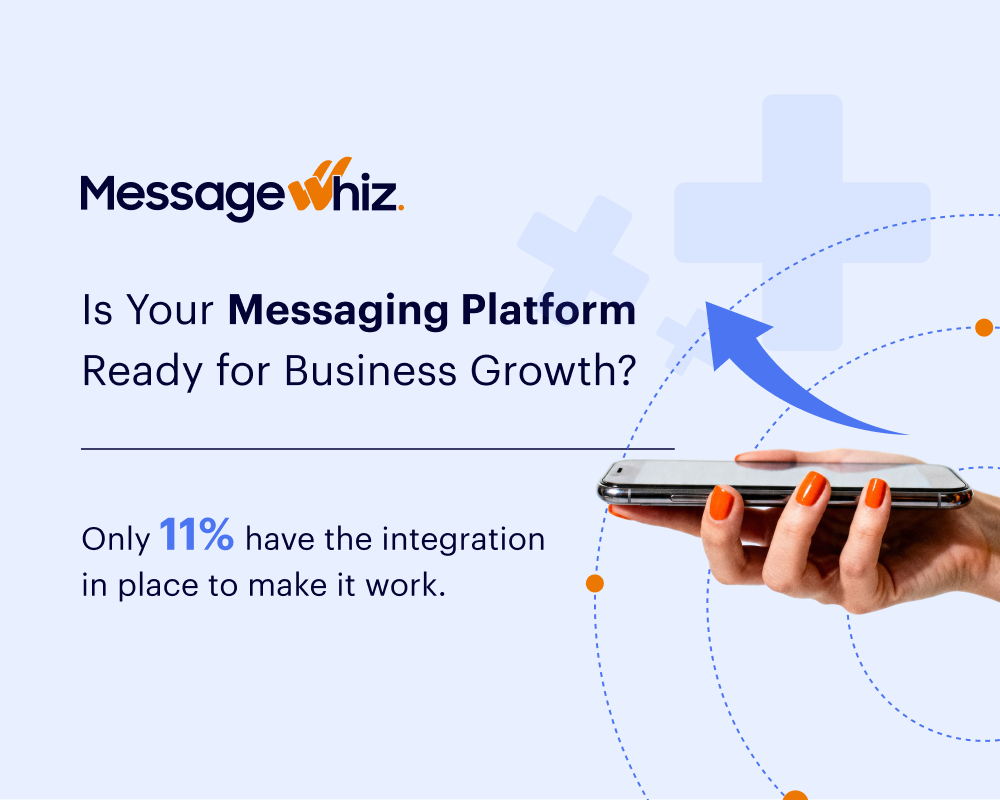
If there is one finding from the survey that explains the execution gap more clearly than any other, it is this: only 11% of companies describe their messaging platform as fully integrated with their CRM or business systems.
Nine out of ten companies are operating with a disconnect between the data they hold about their customers and the messaging tools they use to reach them.
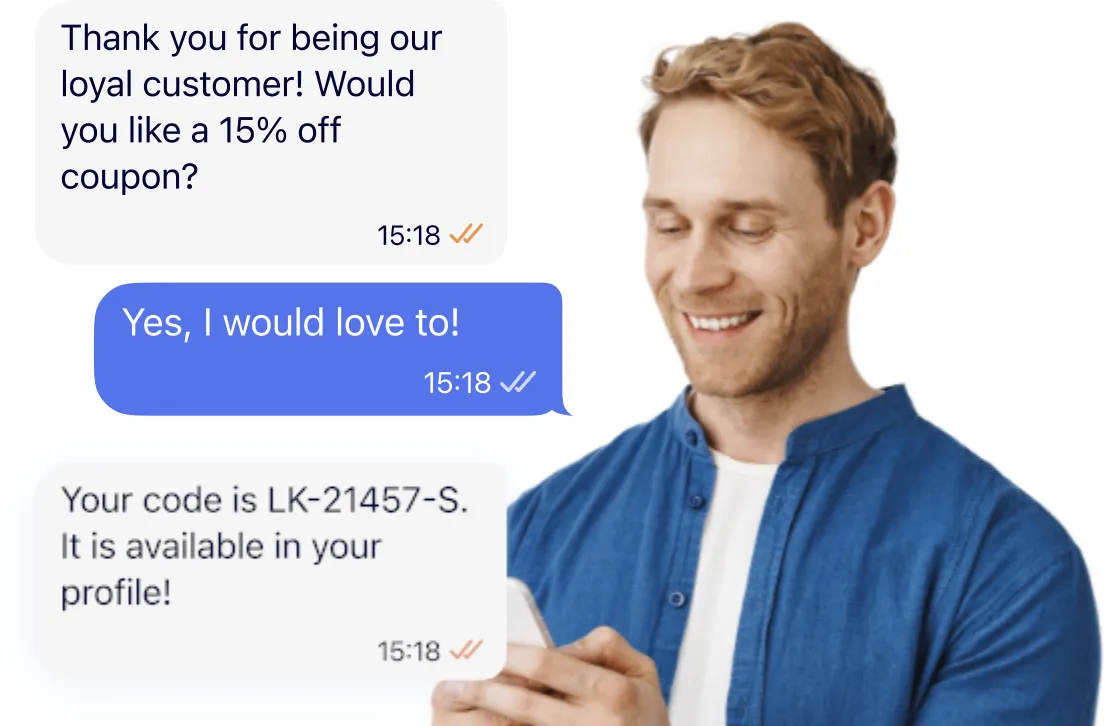
The consequences of that disconnect are practical and immediate. Without integration, campaigns cannot be triggered by real customer behavior. Consequently, campaigns default to one mode: reactive. A notification goes out when an event occurs. A service message follows a transaction. An alert fires when something goes wrong.
Personalization becomes surface-level at best. A customer who just made a purchase, abandoned a cart, reached a loyalty milestone, or went inactive for 30 days receives the same scheduled broadcast as everyone else. The moment passes. The opportunity disappears.
This is not a niche problem for companies with complex tech stacks. It is the default operating condition for 89% of the market.
The business impact of that disconnect is visible in how companies actually use messaging today. According to the survey:
- 91% of companies use messaging for customer notifications and alerts
- 86% use it for customer service and support
- Only 53% use it for growth purposes like promotions, loyalty programs, reactivation, or behavioral triggers
The gap between operational messaging adoption (99%) and growth messaging adoption (53%) is not a coincidence. It is the direct result of a messaging stack that was never built to connect customer data to outbound communication in real time. That gap represents the revenue that operational unreadiness is leaving on the table.
Companies recognize this. The same survey shows:
- Usage of messaging for individual promotions is set to rise from 24% to 62% within six months.
- Loyalty program messaging is projected to nearly double.
The intent to shift messaging from a cost center to a growth channel is genuine and accelerating.
But intent does not close the integration gap. Infrastructure does.
What Does Messaging Operational Readiness Actually Look Like?
A CPaaS messaging platform that is operationally ready to support growth does a specific set of things that a disconnected one cannot:
Integration
- Real-time CRM data sync
Customer actions trigger an immediate response - Business systems integration
Platform connects to existing systems automatically, not dependent on manual reporting cycles
Messaging intelligence
- Behavior-based message triggers
Messages fire within seconds of a customer action (e.g. reaching a loyalty threshold), not on a scheduled blast. - Personalization at scale
Every message reflects what that specific customer did, what they care about, and where they are in their journey without manual effort.
Performance & learning
- Closed-loop performance tracking
Delivery rates, CTR, and conversion data automatically feed back into routing decisions, message variations, and timing.
- Relevance over reach
Platform is optimized for relevant, timely messages — not scheduled promotional blasts.
Evaluation criteria
- Easy integration with existing systems
Ranked the #1 requirement by 62% of companies when evaluating a new messaging channel.
Why Is 2026 the Year to Close the Messaging Integration Gap?
62% of businesses expect to increase their investment in messaging in 2026. No respondents plan to reduce it.
That capital is going somewhere. The organizations that direct it toward closing the integration gap, building operationally ready messaging infrastructure, and connecting their CRM data to their outbound communication will convert that investment into measurable growth. The ones that direct it toward adding channels on top of a disconnected stack will generate more operational volume without unlocking the revenue potential underneath.
The 2026 State of Digital Customer Communication Survey data makes this tension visible across 300 companies in five industries. The data does not describe a future state. It describes the current gap between where most companies are and where the highest-performing ones are heading.
Operational readiness is not a prerequisite to messaging. It is a prerequisite to messaging that grows your business.
Talk to our team to see how MessageWhiz connects your messaging platform to your CRM and business systems, so your communication infrastructure is ready for what comes next.
FAQ
What is messaging operational readiness?
Messaging operational readiness means your messaging platform is fully integrated with your CRM and business systems, configured to trigger communications based on real customer behavior, and capable of personalizing and tracking performance at scale. It is the difference between messaging that reacts to events and messaging that drives them.
Why do most companies lack full CRM and messaging integration?
The 2026 State of Digital Customer Communication Survey found that 89% of companies operate with only partial or no integration between their messaging platforms and CRM systems. The most commonly cited barrier is that available solutions lack unified functionality to bring all channels and data sources into a single operating environment.
What revenue impact does poor messaging integration have?
Without CRM integration, companies cannot trigger messages based on real-time customer behavior, personalize communications at scale, or measure the revenue contribution of individual campaigns accurately. The result is that messaging remains an operational cost rather than a growth driver. The survey found that only 53% of companies currently use messaging for growth purposes, despite 99% using it operationally.
What is the difference between operational messaging and growth messaging?
Operational messaging covers notifications, alerts, service updates, and one-time passwords. These support existing customer relationships and keep business processes running. Growth messaging covers promotions, loyalty programs, reactivation campaigns, and behavioral triggers designed to increase revenue and retention. Most companies have operationalized the first category but have not yet unlocked the second.
What should a business look for in a messaging platform to close the integration gap?
The most important capabilities are real-time API integration with CRM and business systems, support for event-driven or behavioral message triggers, multi-channel delivery across SMS, WhatsApp, RCS, Viber, Telegram, email, and voice, and analytics that track delivery and conversion back to individual customer actions. 62% of businesses in the survey cited easy integration with existing systems as their top requirement when evaluating a new messaging channel.