


















APP fraud, short for authorized push payment fraud, is what happens when a scammer convinces someone to willingly send money to an account that isn’t who they think it is. There’s no hacking, stolen credit card, or malware involved in this social engineering scam. The victim uses their own passwords and authentication tools to initiate the transfer, because they believe they have to.
The frustrating thing about APP fraud is that it doesn’t exploit a technical weakness. It exploits the fact that people trust what sounds like their financial institution, panic when told their money is at risk, and move fast when someone tells them they have to.
Every control the industry has built, including strong authentication, transaction monitoring, and Confirmation of Payee, sits at the wrong end of the problem. By the time the payment hits the rail, the damage is done. Meanwhile, the victim believes they did the right thing.
What nobody has cracked yet is the moment just before the transfer. The window where the fraud is still happening but the money hasn’t moved. That’s where this gets interesting.
How has the liability picture changed?
For a long time, APP fraud was treated as a consumer education problem. Financial institutions would add a warning screen, remind customers to verify the recipient, and largely wash their hands of it if the customer clicked through anyway.
That’s over.
The UK’s Payment Systems Regulator introduced mandatory reimbursement in October 2024. Both the sending and receiving institutions are on the hook, equally responsible to repay the victim. In the first year, UK institutions paid out £173 million. This wasn’t a reputational penalty, but a hit on the balance sheet.
The EU is heading the same direction. Lawmakers reached political agreement on the new Payment Services Regulation in November 2025, and once it takes effect, expected as early as 2027, impersonation fraud becomes a mandatory refund obligation regardless of whether the customer technically ‘authorized’ the payment. The old defense, blaming the customer who clicked approve, won’t survive that shift.
Prevention now has a direct financial return. Stop the fraud before it completes, and you’ve avoided a liability, not just a complaint.
Is WhatsApp the answer to solving APP Fraud?
WhatsApp isn’t the only answer, but it’s the channel that makes an old idea actually enforceable: hold the payment, and don’t release it until the customer clears a real challenge. Institutions have tried versions of this for years, with warning screens and call scripts. They haven’t worked, because there was never a reliable way to confirm the customer actually engaged, or to stop the transaction if they didn’t.
WhatsApp closes both gaps. The WhatsApp Business API supports structured, interactive messages, so the bot can capture an actual typed answer instead of hoping a distracted customer reads a static warning. The business account carries a verified profile, so the customer is responding to a channel the fraudster can’t spoof or stand up a convincing copy of. And delivery and read confirmation give the institution’s risk engine a way to know the challenge was actually seen, before it decides whether to hold the payment or release it.
Think about what happens when a fraud detection system flags a suspicious transaction today, without this. The financial institution might block it, call the customer, or send an in-app alert. Each of these has a problem. A call can be coached around, because fraudsters routinely tell victims to expect one and hang up. An in-app notification gets dismissed, because the fraudster on the phone tells them it’s a test. Even a well-timed SMS alert is built for one-way delivery, not the two-way confirmation a hold-and-challenge control actually needs.
Is this a warning you can ignore?
Most fraud warnings today are passive. A screen the customer clicks past. A message they can dismiss. A call they can end.
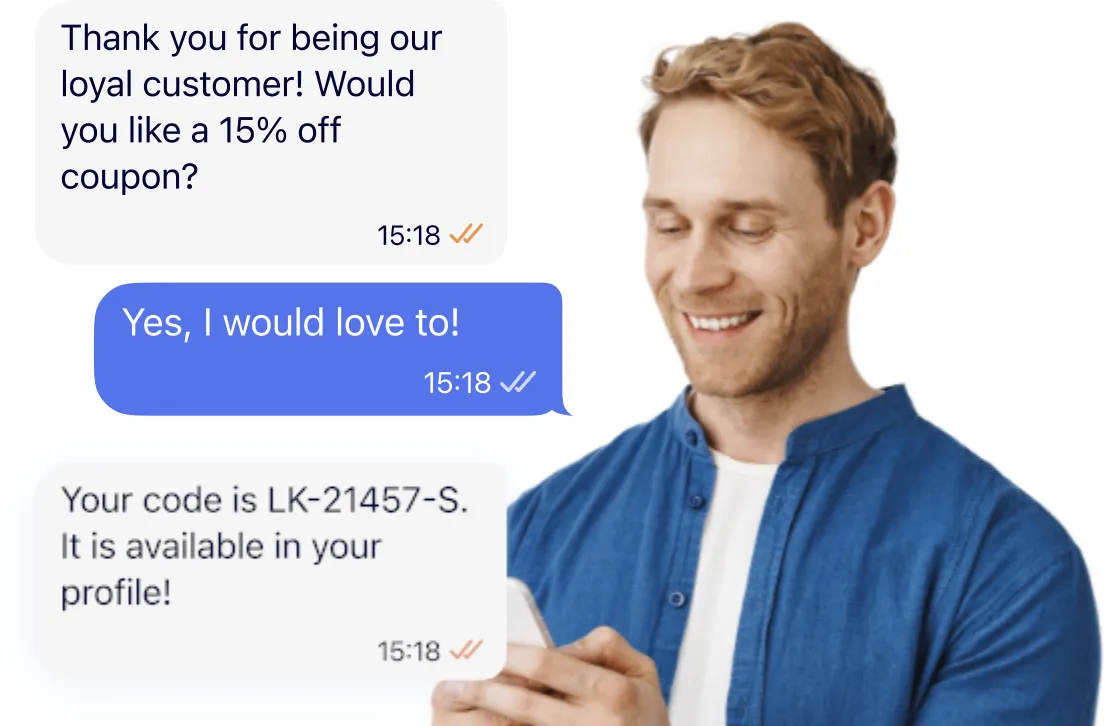
The WhatsApp intervention is none of those things. It’s a mandatory checkpoint, a gate that only opens once the customer has engaged with a structured series of questions and responses.
The questions are deliberate. Not “are you being scammed?” because that puts people on the defensive. More like: did you initiate this payment yourself? Is someone on a call with you right now? Has anyone told you this needs to happen urgently?
Asking those questions, and having to type the answers, is often enough. Fraud runs on panic. The moment you create a pause and make the victim articulate what’s happening, the narrative the scammer built starts to crack.
The bot follows up with a few hard facts. Your financial institution will never ask you to move money to a safe account. No legitimate investment firm cold-calls you demanding urgent transfers. It then walks the customer through a clear set of options: confirm the payment and proceed, cancel it, or connect immediately to a fraud specialist.
The whole interaction takes two to three minutes. But those minutes are the difference between a fraud that completes and a liability that lands on the institution, and one that doesn’t.
How complicated is this build?
Financial institutions already use the WhatsApp Business API for OTPs and transaction confirmations. The infrastructure is there. What’s needed is a pre-approved Utility template, a structured bot flow, and a human handoff for escalation.
This is where MMDSmart MessageWhiz fits in. Rather than building and maintaining the channel logic in-house, financial institutions connect through MessageWhiz’s API and get multi-channel delivery, bot flow management, and fallback routing out of the box. The fraud detection logic stays with the institution. MessageWhiz handles the intervention layer: delivering the checkpoint and capturing the customer’s response.
One operational note worth flagging: this requires customers to have opted in to WhatsApp communication. Financial institutions that haven’t started collecting that at onboarding should start now. It’s a checkbox, not a rebuild, but it needs to be in place before the capability is useful.
Where does WhatsApp fit in the big picture of APP fraud prevention?
No single tool stops APP fraud. Fraudsters adapt, always. What works is layering interventions so each one raises the cost and complexity of running a successful scam.
A mandatory WhatsApp checkpoint doesn’t replace transaction monitoring or Confirmation of Payee. It fills the gap those tools can’t reach: the human in the loop, in the moment the fraud is actually happening. Done well, it’s also the kind of intervention that feels less like an institution protecting itself and more like one actually looking out for its customer.
Given where regulation is heading, that distinction matters more than it used to.
FAQ: Getting inside APP Fraud
What are common types of APP fraud?
Here are five common types of APP fraud:
- Bank impersonation scam. A fraudster poses as a bank’s fraud department, tells the victim their account has been compromised, and instructs them to move money to a “safe account” that the fraudster controls.
- Investment fraud. A scammer promises high, guaranteed returns on a fake investment opportunity and pressures the victim to transfer funds quickly before the “deal” closes.
- Romance scam. A fraudster builds a long-term emotional relationship with the victim online, then invents an emergency (medical bills, travel costs, a business problem) that requires an urgent payment.
- Invoice or CEO fraud. A scammer impersonates a supplier, contractor, or company executive and convinces an employee to redirect a legitimate invoice payment to a different account.
- Purchase scam. A fraudster advertises goods or services (often on a marketplace or social media) that don’t exist, collects payment upfront, and never delivers.
How exposed is your institution to APP fraud liability?
More than it used to be. Under the UK’s mandatory reimbursement rules, you can be held equally responsible for repaying the victim, even when the customer technically authorized the payment themselves. If the EU’s Payment Services Regulation takes effect as expected, you could face similar refund obligations for impersonation fraud, regardless of whether the customer clicked approve.
What can you do to intervene before a payment completes?
You can hold the payment and require the customer to clear a real challenge before it releases. This works only if you can confirm the customer actually engaged with the challenge, not just that a message was sent. A structured, interactive WhatsApp message lets you capture a typed response instead of hoping a distracted customer reads a static warning screen.
How do you verify a customer actually saw a fraud warning?
A phone call can be coached around, since fraudsters often warn victims to expect one and tell them to hang up. An in-app notification can be dismissed just as easily. If you use a verified WhatsApp Business channel with delivery and read confirmation, your risk engine can know the challenge was actually seen before it decides whether to hold or release the payment.
What’s required to add a WhatsApp fraud checkpoint to your process?
If you already use the WhatsApp Business API for OTPs or transaction confirmations, the infrastructure is largely in place. What you’ll need to build is a pre-approved Utility template, a structured bot flow, and a human handoff for escalation. A platform like MMDSmart MessageWhiz can handle the bot flow management, delivery, and fallback routing, so your fraud detection logic stays where it belongs, with your team.
How do you balance fraud prevention with customer friction?
You can keep the interaction short. A well-designed checkpoint takes your customer two to three minutes to complete, and it can feel less like an obstacle and more like your institution looking out for them. That distinction matters, especially as regulation moves toward treating prevention as a financial return rather than a compliance checkbox.