











Business messaging adoption is surging as brands leverage conversational commerce to build deeper customer relationships. Over 70% of consumers now prefer messaging for business communication, and with A2P RCS traffic projected to skyrocket, enterprises are shifting budget toward the interactive channels their customers already favor. The result is higher open rates, frictionless and automated experiences, and stronger ROI than one-way notifications could ever deliver.
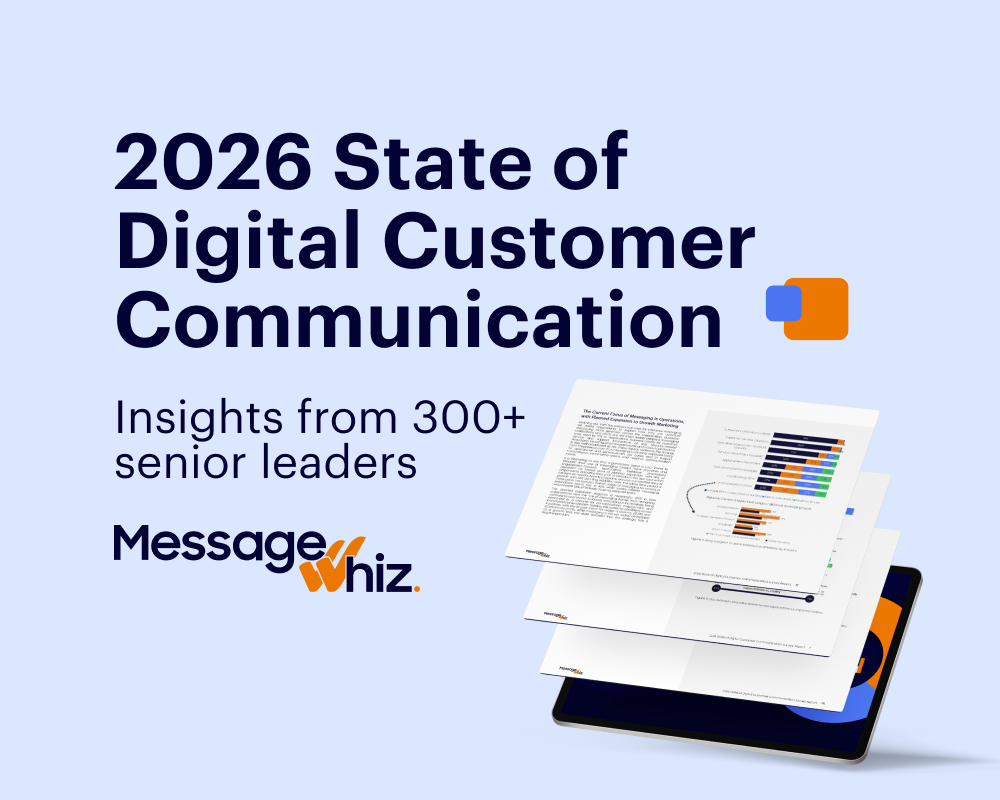
98% of enterprise leaders plan to expand their communication channels over the next 12 months, and 62% will increase their messaging investment over the same period. Those are two of the headline findings from the 2026 State of Digital Customer Communication Survey, commissioned by MMDSmart’s MessageWhiz and based on responses from 300 business leaders worldwide.
That same shift is the backdrop to news we shared earlier today: MMDSmart has doubled its global workforce to 300 employees over the past three years, sustained by double-digit compound annual growth. Our growth isn’t an isolated story. It mirrors what’s happening across the voice and messaging market as companies changing how they engage with their customers.
This post unpacks what’s driving that change, what the data tells us, and where the next wave of investment is heading.
What is Rich Business Messaging and How Does It Change the Equation?
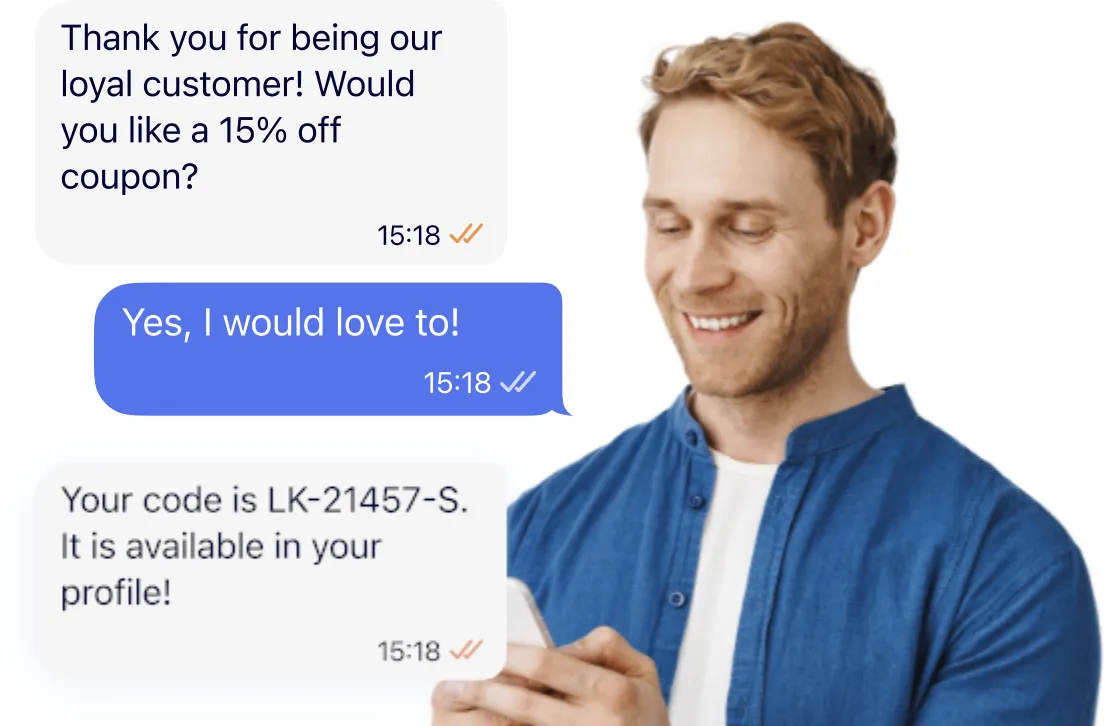
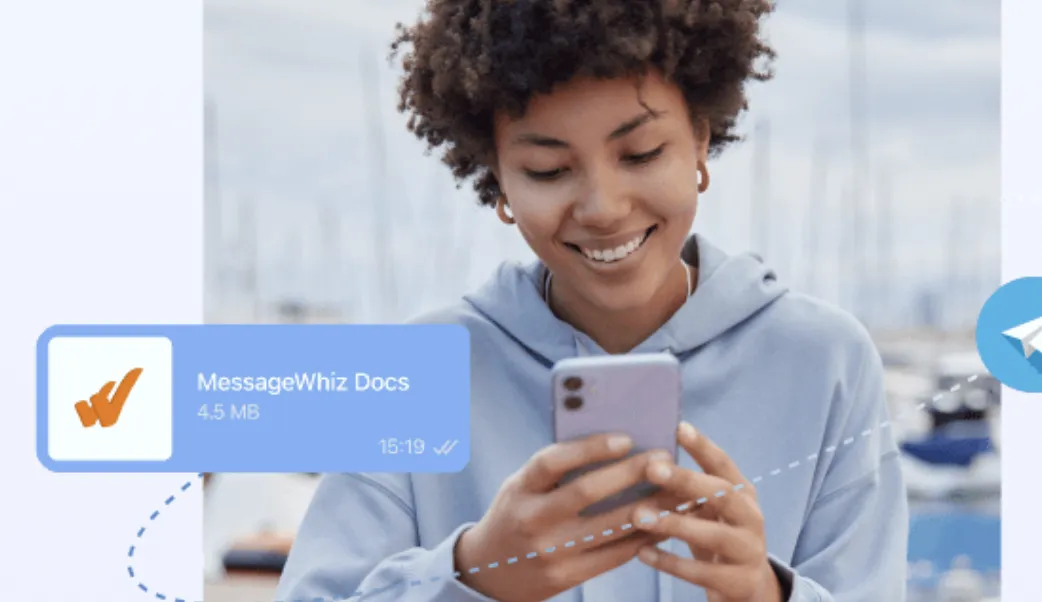
Rich business messaging is enterprise customer communication delivered over interactive channels like WhatsApp, RCS, Viber, and Telegram. Unlike SMS, these channels support images and video, interactive menus and carousels, and responses that trigger real business workflows from authentication to order tracking to live agent handoff.
In short: rich messaging turns a one-way notification into a complete customer experience inside a single thread.
For decades, business messaging meant SMS. Reliable and near-universal, but extremely limited, a text message was restricted to 160 characters and could deliver information, but not much else.
These channels matured into genuine enterprise communication platforms, each building capabilities that SMS was never designed to support:
- Two-way conversation: customers can reply, ask questions, or complete a purchase without leaving the thread.
- Rich media: product images, video demos, location pins, and verified branding.
- Interactive elements: buttons, carousels, quick replies, and structured menus.
- Workflow triggers: a single tap can fire a CRM update, route a request, or hand off to a live agent.
Rich messaging opened a door that brands are now moving through quickly. Messaging stopped being purely a delivery mechanism and started becoming a growth channel. Once businesses recognized that, the investment followed.
Rich Communication Services (RCS) is central to that momentum, with application-to-person (A2P) RCS traffic projected to grow rapidly as the channel scales across Android and now iOS.
| Channel | Best for | Reach | Rich media | Two-way | Verified branding |
| SMS | Universal alerts, OTPs, time-critical notifications | Global, every handset | No | Limited | No |
| RCS | Branded campaigns, conversational commerce | Growing on Android; and now iOS | Yes | Yes | Yes |
| Service, support, and conversational commerce | 2B+ users, especially strong in EU, LATAM, APAC | Yes | Yes | Yes | |
| Viber | Markets where Viber dominates (CEE, SEA) | 1.1B users in key regions | Yes | Yes | Yes |
Table 1: Comparing SMS vs. RCS vs. WhatsApp vs. Viber
How Are Enterprises Investing in Messaging in 2026?
The 2026 State of Digital Customer Communication Survey, commissioned by MMDSmart’s MessageWhiz, surveyed 300 business leaders across industries and regions. The findings reflect exactly this kind of accelerating adoption. That appetite reflects what messaging now delivers for the business: higher open rates than legacy channels and frictionless, automated experiences that convert engagement into measurable ROI.
- 62% of respondents expect their messaging investment to increase over the next 12 months.
- 98% are likely to expand their communication channels in the same period.
- 38% plan to adopt personalized promotional messaging within the next six months even though only 24% use it today.
That last number matters. More companies are planning to roll out personalized promotions than have already arrived there. That’s a leading indicator: investment in the underlying infrastructure such as segmentation, real-time data, AI-powered timing will follow the use case.
Why is AI Becoming Core to Business Messaging Infrastructure?
Rich communication channels raised the ceiling on what messaging could deliver. AI is now raising it further.
42% of business leaders in our survey rate AI as very or extremely important when selecting a communications platform. That figure reflects a real shift in how enterprises think about the category. Companies aren’t shopping for a platform with an AI feature added on. They want infrastructure where AI drives the core functions:
- Routing: choosing the right channel, the right time, and the optimal route for every message.
- Timing: sending when each customer is most likely to engage, not when the campaign calendar says.
- Personalization: tailoring content to behavior, history, and intent.
As Arie Frenklakh, CEO of MMDSmart, put it in today’s announcement: “AI is no longer a feature you add to a product but the foundation of how efficiently enterprises communicate with their customers at scale.”
MMDSmart has spent nearly two decades building that foundation. With control of our global routes secured, an engineering team that has doubled in size over the past three years, and offices in Israel, Kyiv, Sofia, Munich, and the UAE, we are ready to continue supporting enterprise clients through this period of growth.
Where is the Next Wave of Messaging Headed?
Despite the growth already underway, the survey data also shows how much runway remains. 89% of respondents report their messaging platform is only partially integrated with their CRM or other business systems. Most enterprises are still running messaging that operates on a schedule rather than responding to what customers actually do. The companies investing in tighter integration and smarter automation now are the ones that will be ready for the next phase of that expansion.
Talk to our team to learn how MMDSmart’s MessageWhiz can help you build the messaging infrastructure your business needs to grow.
Here are 5 FAQs to add before the CTA. Drop them in as a new section with the heading Frequently Asked Questions.
Frequently Asked Questions
What is rich business messaging?
Rich business messaging is enterprise customer communication delivered over interactive channels like WhatsApp, RCS, Viber, and Telegram. Unlike SMS, these channels support two-way conversation, rich media, interactive buttons, and workflow triggers — turning a simple notification into a complete customer experience.
How is AI used in business messaging platforms?
AI handles the functions that determine whether a message actually performs: routing it to the right channel, timing it based on when each customer is most likely to engage, and personalizing content based on behavior and history. Companies are increasingly looking for platforms where AI drives these functions by default, not as an optional add-on.
Which messaging channels are enterprises prioritizing in 2026?
According to the 2026 State of Digital Customer Communication Survey, 98% of enterprise leaders plan to expand their communication channels over the next 12 months. WhatsApp, RCS, and Viber are the primary rich channels seeing enterprise adoption, alongside continued use of SMS for time-critical notifications and OTPs.
Why are companies moving beyond SMS for customer communication?
SMS is reliable and near-universal, but capped at 160 characters with no support for images, interactive elements, or two-way conversation. As channels like WhatsApp and RCS reached enterprise scale, businesses recognized that messaging could do more than deliver information. it could complete transactions, resolve service issues, and drive repeat purchases inside a single thread.
What does CRM integration have to do with messaging performance?
A messaging platform that isn’t connected to your CRM, AI agents, or other management systems can only operate on a fixed schedule. Integration is what allows messages to respond to real customer behavior rather than a campaign calendar. The 2026 survey found that 89% of businesses report their messaging platform is only partially integrated with their business systems, which is where much of the next wave of investment is heading.