















As digital platforms continue to prioritize security and seamless user experience, Telegram OTP has emerged as a fast, reliable method for user authentication. Businesses are increasingly turning to Telegram-based one-time passwords to reduce fraud and streamline login flows.
What Is Telegram OTP?
A Telegram OTP is a one-time password delivered to users through Telegram instead of traditional SMS or email channels. OTPs are short-lived authentication codes used to verify user identity during login, transactions, or sensitive account actions.
Rather than relying on carrier networks, Telegram OTP uses Telegram bots to deliver messages instantly over encrypted internet connections. This makes Telegram OTP especially attractive in regions where SMS delivery is unreliable or costly.
A Telegram OTP bot automates this process by generating, sending, validating, and expiring OTP codes in real time.
Benefits of Using a Telegram OTP
Using Telegram as an OTP delivery channel offers several advantages over traditional authentication methods.
- Faster delivery: Telegram messages are typically delivered instantly, avoiding SMS latency or carrier delays.
- Higher deliverability: Telegram messages are less likely to be blocked or filtered compared to SMS or email OTPs.
- Lower operational costs: Telegram OTP eliminates per-message SMS fees, making it cost-effective at scale.
- Improved security posture: Telegram’s encrypted transport and bot-based delivery reduce exposure to common SMS attacks like SIM swapping.
- Better user experience: Users already active on Telegram can authenticate without switching apps or waiting for texts.
How Telegram OTP Works
A Telegram OTP system typically follows a structured flow.
- User initiates authentication: The user attempts to log in or perform a sensitive action on a website or application.
- OTP is generated: The backend generates a short numeric or alphanumeric OTP tied to the user session.
- Telegram OTP bot sends the code: The OTP is delivered via a Telegram bot to the user’s Telegram account.
- User submits the OTP: The user enters the received code back into the application.
- OTP is validated: The backend verifies the OTP, expiration time, and session binding before granting access.
This flow is similar to SMS-based OTP, but Telegram OTP benefits from faster delivery and stronger infrastructure reliability.
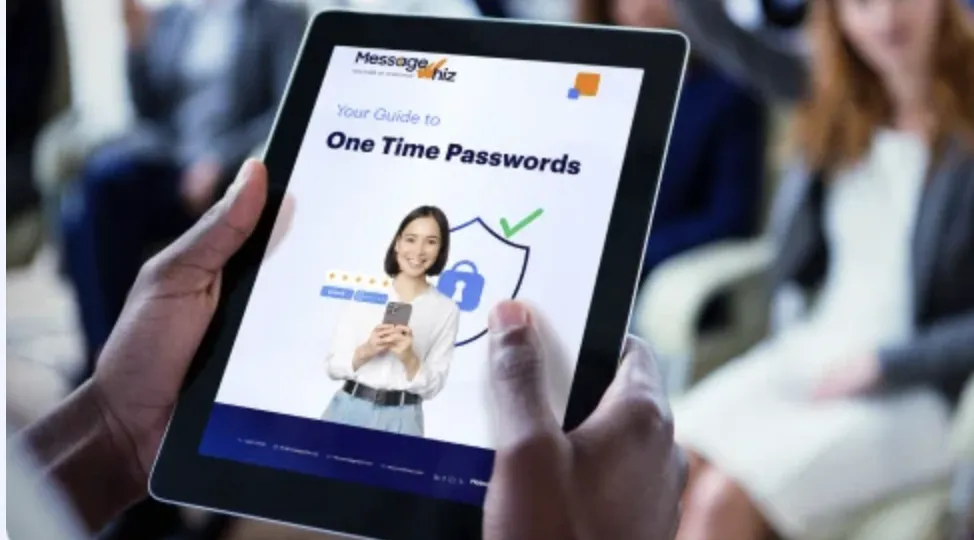
Learn more about how one time passwords improve user security. Download our OTP Ebook today!
Use Cases of Telegram OTP Bots
Telegram OTP bots are widely used across industries that require secure and time-sensitive authentication.
App and Website Logins
Many SaaS platforms and consumer apps use Telegram OTP as a second factor for login verification. It is particularly effective for users who already rely on Telegram for daily communication. Telegram OTP bots can replace SMS entirely or act as a secondary channel alongside email or push notifications.
Banking and Fintech Apps
Fintech platforms use Telegram OTP to confirm logins, payment approvals, account changes, and withdrawals. Because SMS-based OTPs are vulnerable to SIM swap attacks, Telegram OTP provides an added layer of resilience, especially for international users and high-value transactions.
E-commerce Transactions
E-commerce platforms use Telegram OTP to verify purchases, confirm refunds, and prevent account takeovers. By delivering OTPs through Telegram, merchants can reduce checkout friction while improving transaction security.
Community Platforms
Online communities, forums, and membership platforms use Telegram OTP bots to verify user identity, protect admin actions, and prevent bot-driven abuse. Telegram OTP is particularly useful for communities that already use Telegram as a primary communication channel.
Limitations of Telegram OTP and When to Use Alternatives
Telegram OTP is not the right fit for every authentication scenario. Understanding where it falls short helps you make smarter decisions about channel selection and fallback design.
The most significant constraint is user adoption. Telegram OTP only works if the user has an active Telegram account and has connected it to your platform. For consumer-facing products with a broad or older user base, that requirement can create meaningful friction during onboarding or verification.
Telegram also operates over the internet rather than carrier networks. In practice, this is usually an advantage. But in environments where internet access is restricted, where Telegram is blocked, or where users are in low-connectivity areas, delivery cannot be guaranteed. Unlike SMS, which reaches virtually any mobile number without app installation, Telegram requires both a working internet connection and an active account.
There are also regulatory considerations. In some regions and industries, compliance frameworks specify which authentication channels are acceptable. Telegram OTP may not meet those requirements without additional documentation or a certified implementation.
For these reasons, Telegram OTP works best as part of a layered authentication strategy rather than as the sole delivery channel. If your users are already active on Telegram, the channel is reliable and cost-effective. If they are not, or if your compliance requirements are strict, SMS or email OTP may be more appropriate as the primary channel, with Telegram available as a user-selectable option.
A well-designed system accounts for all of these scenarios from the start.
Best Practices for Building a Secure Telegram OTP System
Security should be the foundation of any OTP implementation, especially when using messaging platforms as authentication channels. A well-designed Telegram OTP system must protect against interception, abuse, replay attacks, and operational failure while remaining fast and user-friendly. The following best practices apply specifically to building a secure, scalable Telegram OTP system.
Use HTTPS everywhere and encrypt service-to-service traffic
All communication between your application, OTP generation service, and Telegram APIs must be protected using HTTPS with modern TLS configurations. This includes frontend requests, backend API calls, and internal service-to-service communication. Encrypting traffic in transit prevents attackers from intercepting OTPs, session identifiers, or authentication metadata through man-in-the-middle attacks. For distributed systems or microservices, mutual TLS or private network encryption should be used to ensure only trusted services can exchange OTP-related data.
Hash OTPs at rest and never store or log them in plaintext
OTPs should never be stored, cached, or logged in plaintext at any stage of their lifecycle. Instead, hash OTP values using strong, one-way cryptographic hashing algorithms and store only the hash for comparison during validation. This ensures that even if a database or log store is compromised, attackers cannot recover usable OTP codes. Logging systems should be carefully reviewed to ensure OTPs are never written to logs, traces, or error messages, including during debugging or incident analysis.
Set short OTP expiration times and bind to sessions
OTPs should have very short expiration windows, typically between 30 and 120 seconds, to minimize the risk of misuse. Each OTP must also be bound to a specific user session, authentication attempt, or transaction context. This prevents an OTP generated for one action from being reused for another. Session binding ensures that even if a code is intercepted or delayed, it cannot be replayed outside of its original intent or timeframe.
Limit attempts and add progressive delays to stop brute force
To protect against brute-force attacks, strictly limit the number of OTP validation attempts allowed per session or authentication flow. After each failed attempt, introduce progressive delays before allowing another attempt. These delays slow down automated attacks while having minimal impact on legitimate users. In high-risk environments, accounts or sessions may also be temporarily locked after repeated failures, with clear user feedback and recovery options.
Make requests idempotent and prevent OTP replay
OTP validation endpoints should be idempotent, meaning repeated submissions of the same request do not produce unintended side effects. Once an OTP has been successfully validated, it must be immediately invalidated and marked as used. This prevents replay attacks where an attacker attempts to reuse a previously valid OTP. The system should also reject duplicate or out-of-order validation requests to ensure each OTP can only ever be consumed once.
Implement rate limiting per user, IP, device, and tenant
Rate limiting is critical for protecting your Telegram OTP bot from abuse, spam, and denial-of-service attacks. Apply limits across multiple dimensions, including user identity, IP address, device fingerprint, and tenant or account. This layered approach prevents attackers from bypassing limits by rotating IPs or targeting shared resources. Rate limits should be adaptive, allowing normal user behavior while aggressively throttling suspicious patterns.
Build fallback channels and a safe recovery flow
Even highly reliable channels like Telegram can experience outages, blocks, or user-side issues. A secure Telegram OTP system should always include fallback authentication options, such as email, secondary messaging channels, or app-based verification. In addition, provide a clearly defined and secure recovery flow for users who cannot receive OTPs. Recovery mechanisms should include additional identity checks and safeguards to prevent social engineering or account takeover during fallback scenarios.
How to Get Telegram OTP Right
Telegram OTP offers a powerful alternative to SMS-based authentication, combining speed, reliability, and cost efficiency. With the rise of Telegram OTP bots, businesses can deliver secure authentication experiences that align with modern user expectations.
Whether you are securing app logins, protecting financial transactions, or managing online communities, a well-designed Telegram OTP system can significantly improve both security and usability—when built with the right safeguards in place.