












What Is SMS as a Service?
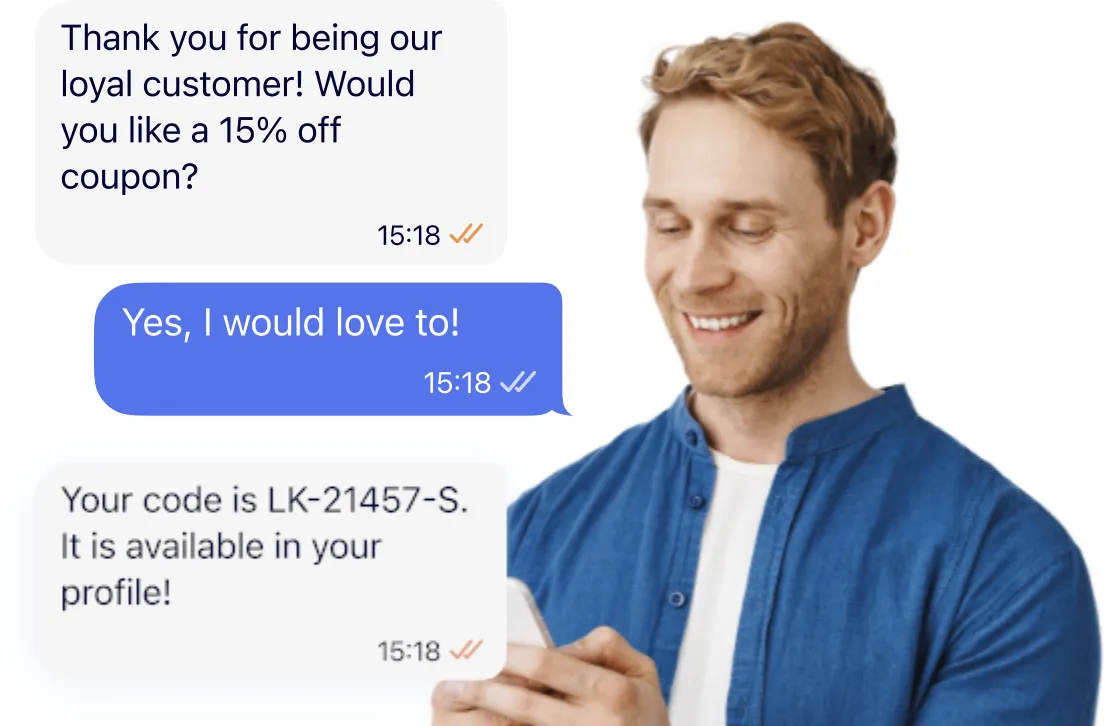
SMS as a Service is a cloud-based model for sending and receiving text messages through a provider’s infrastructure, accessed via an API or web platform. Instead of owning the underlying telecom setup, you subscribe to a provider who manages all of it. Your team connects to the platform, and your messages go out.
The model follows the same pattern as other cloud software shifts: you get the capability without the overhead of running it yourself.
What Are the Benefits of SMS as a Service?
The practical advantages become clear when you compare this model to building or managing SMS infrastructure in-house.
- No infrastructure to manage. Carrier relationships, routing logic, number provisioning, and network redundancy are the provider’s responsibility.
- Scalable on demand. Whether you’re sending a few hundred messages or several million, your setup doesn’t change. Capacity can scale to match your volume based on where your business is at the time.
- Faster to deploy. Connecting to an SMS API typically takes hours or days, not weeks. Your marketing or operations team can start sending without a lengthy technical build.
- Compliance built in. Opt-out handling, sender registration, and consent management are part of well-designed platforms.
- Delivery visibility. Real-time reporting on delivery status and click-through rates can help you measure what’s working and adjust your campaigns based on actual performance data.
How Is SMS as a Service Different from a Traditional SMS Gateway?
A traditional SMS gateway is a relay that forwards your messages from one network to another. Gateways can work for basic sends, but most were designed before modern business messaging existed. They typically lack built-in analytics, automation, two-way communication, or compliance tooling. Connecting a legacy gateway to your CRM, AI agents, or other management systems also tends to require significant custom development.
SMS as a Service platforms include everything a gateway does, and build programmable functionality on top: delivery receipts, two-way messaging, campaign management, automation triggers, and API access that connects cleanly with your existing stack. The difference matters most when you’re trying to run time-sensitive campaigns, automate transactional messages, or respond to customers in real time.
How Does SMS as a Service Work?
Your application, CRM, AI agent, or management system sends a request to the provider’s SMS API, which was triggered by a purchase, an appointment, or other predefined action. The provider routes the message across carrier networks to the recipient’s phone. Delivery status comes back to your system in real time, confirming whether the message arrived, failed, or is still in transit.
If the recipient replies, that response returns through the same channel, enabling two-way conversations handled by your team or an automated chatbot scenario.
The technical complexity sits on the provider’s side. From your side, it behaves like any other connected tool.
What Features Should You Look For in an SMS as a Service Platform?
Not all SMS platforms are built the same. These are the capabilities that separate platforms worth considering from those you’ll outgrow quickly.
Does the platform connect cleanly with your existing tech stack?
The API is where most platform decisions get made or broken. If integration requires custom middleware, undocumented workarounds, or a long professional services engagement, the platform will slow your team down before it ever delivers value. What you want is a well-documented REST API, reliable SDKs in the languages your team already uses, and webhook support so your CRM, AI agents, or other management systems can exchange data without friction.
Beyond the technical spec, pay attention to how the vendor maintains its documentation. Outdated docs are a signal about how the platform is maintained overall. A platform that treats its API as a first-class product updates documentation alongside feature releases, not months later.
Can the platform handle high-volume campaign sends?
Marketing use cases put different demands on a platform than transactional ones. Sending a large volume of messages over a short window requires throughput management, list segmentation that doesn’t degrade at scale, and scheduling controls that let you pace delivery based on your audience’s time zones and your campaign’s timing requirements.
Ask vendors specifically about throughput limits and what happens when you approach them. Some platforms throttle sends without warning, which can cause a campaign launched at peak time to stagger into off-hours. The ability to segment recipients based on behavior, geography, or prior engagement should be a standard feature, not an add-on.
How does the platform handle time-sensitive transactional messages?
OTP codes, order confirmations, and shipping alerts operate on a different standard than marketing campaigns. A promotional message delivered an hour late is inconvenient. An authentication code that expires before it arrives is a broken experience that can cost you a customer.
Transactional messaging needs dedicated routing with higher delivery priority, separate from the queues used for bulk sends. Some platforms, including MessageWhiz, control their own routes, which gives them more visibility into delivery performance and the ability to reroute around carrier issues quickly. Others resell third-party routes, which can introduce additional latency and reduce your ability to diagnose failures. Understanding which model a vendor uses is worth asking before you sign.
Can you trigger messages automatically based on customer behavior?
Scheduled blasts have their place, but the highest-performing SMS programs are built on event-driven triggers. A message sent within minutes of a cart abandonment, a renewal reminder tied to a contract date, or a re-engagement prompt triggered by a period of inactivity will consistently outperform the same message sent on a fixed schedule.
The ability to connect your messaging platform to behavioral signals from your CRM, AI agents, or other management systems is what makes this possible. Look for platforms that support webhook-based triggers, API event hooks, or native integrations with the tools your team already uses for customer data. Without this, you’re managing a send tool rather than a messaging strategy.
What reporting does the platform give you?
Delivery confirmation is the floor, not the ceiling. You need per-message delivery status to identify carrier or routing issues, campaign-level click-through rates to measure engagement, and link tracking to connect message sends to actual downstream behavior. Without this data, you can’t optimize performance over time or make a credible case for ROI internally.
Pay attention to how reporting data is surfaced. A dashboard that shows aggregate stats is useful for monitoring. A platform that gives you exportable, per-message data lets you build your own analysis, connect results to revenue, and identify which segments, messages, or timing strategies are actually driving outcomes.
How does the platform handle opt-outs and sender compliance?
Consent and compliance aren’t features you want to manage manually. Opt-out handling, unsubscribe list management, and sender registration should be built into the platform and enforced automatically.
This matters more as you scale. A small list managed carefully by one person can stay compliant through discipline. A large, multi-market program cannot. The platform should automatically suppress opted-out numbers from future sends, maintain audit logs you can reference in the event of a complaint, and support the sender registration requirements of each market you operate in. If a vendor treats compliance as a configuration task rather than a core capability, that’s a meaningful risk signal.
How Do You Choose the Right SMS as a Service Provider?
A few practical questions can help you narrow the field quickly.
- Does the provider own its routes, or resell them? Owned routes typically deliver better reliability, particularly for transactional messages like OTP codes where delivery failure has direct business consequences.
- What channels does the platform support beyond SMS? If your customer communication strategy includes WhatsApp, Viber, or email, an omnichannel platform that handles all channels in one place can reduce the complexity of managing multiple vendors.
- How does the platform handle compliance? Carrier registration, consent tracking, and opt-out management should be built in and maintained by the provider.
- What does the reporting actually show you? Delivery rates and click-through rates at the campaign level are the minimum baseline. Look for platforms that give you per-recipient delivery status and link-level tracking, so you can optimize based on real performance.
- What happens when something goes wrong? Delivery failures affect real customers in real time. Support quality and response speed matter more in a messaging platform than in most other tools, so it’s worth evaluating this directly before you sign.
FAQ
What is SMS as a Service used for?
SMS as a Service is used for marketing campaigns, transactional messages like order confirmations and OTP authentication codes, appointment reminders, customer service conversations, and automated workflow notifications. Most businesses use a combination of bulk campaign sends and individually triggered messages, depending on their use case and audience.
Is SMS as a Service the same as an SMS API?
Not exactly. An SMS API is the interface that allows your systems to communicate with a messaging provider. SMS as a Service is the broader model. It includes the API, but also the routing infrastructure, compliance tools, analytics, and platform features that make up the full service. The API is the connection point; SMS as a Service is everything the connection reaches.
How do I know if I need SMS as a Service or a simpler texting tool?
If you’re running campaigns to more than a few hundred recipients, triggering messages automatically from your systems, or sending transactional messages at volume, SMS as a Service is the appropriate fit. Simpler tools work well for smaller-scale manual sends but typically lack the API access, automation capabilities, and reporting that growing businesses need.
What is the difference between transactional SMS and promotional SMS?
Transactional SMS messages are triggered by a specific action or event — a purchase confirmation, a password reset, or a delivery notification. Promotional SMS messages are marketing sends, typically campaign-based, sent to opted-in contact lists. Most SMS as a Service platforms support both, but may route them differently based on delivery priority
Conclusion
SMS remains one of the highest-engagement channels available for direct customer communication. When you build that capability on a cloud-based platform rather than a legacy gateway or a basic texting tool, you get the reliability, automation, and data visibility that make it genuinely useful, not just as a broadcast channel, but as part of how you serve customers at the right time and on the right channel.
MMDSmart MessageWhiz supports SMS alongside WhatsApp, Viber, RCS, and email in a single platform, with owned routes, built-in compliance tools, campaign analytics, and API access for your CRM, AI agents, or other management systems. Request a demo to see how it works in practice.