










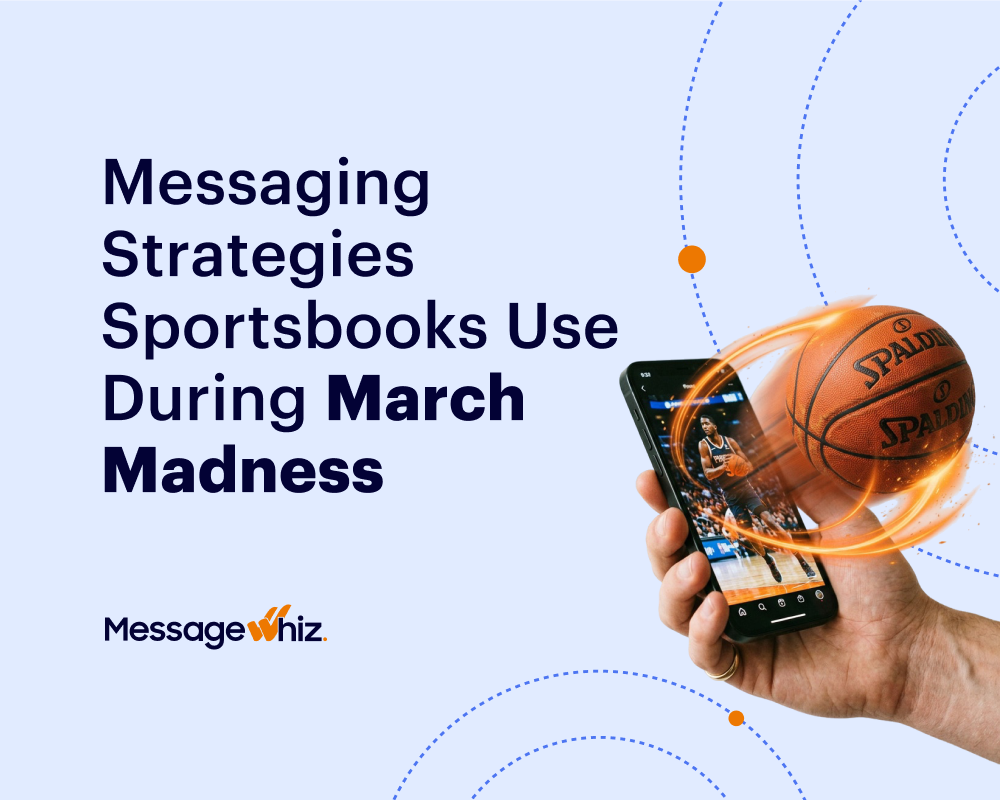
For Sportsbooks player engagement during March Madness depends on real time messaging, personalization, and CRM driven automation. The operators that win are the ones that can connect bettors to games, odds shifts, and betting opportunities the moment they happen.
Every March, the NCAA Division I Men’s Basketball Tournament captures the attention of millions of sports fans and bettors, and betting activity surges across sportsbooks.
The scale of wagering during the tournament is enormous. Industry analysts at H2 Gambling Capital estimate that March Madness betting could reach nearly $4 billion in 2026, creating one of the largest annual betting opportunities for online sportsbooks.
For betting operators, this period represents one of the most important engagement windows of the year. But capturing that opportunity requires more than offering odds and markets.
Ssportsbooks that maximize betting activity during March Madness are the ones that stay continuously connected with bettors throughout the tournament.
Messaging isone of the most effective ways to do that.
It’s not just a support channel for sportsbooks. It is a direct driver of betting activity and revenue during live sporting events.
Real time channels such as SMS, Viber, and WhatsApp messaging allow sportsbooks to reach bettors instantly, respond to live game events, and deliver betting opportunities directly when engagement is highest.
As a result, messaging is increasingly becoming part of the revenue infrastructure that powers modern sportsbooks.
Quick Summary: How Sportsbooks Increase Betting During March Madness
Sportsbooks increase betting activity during March Madness by using real time messaging to connect bettors to live games, odds shifts, and personalized betting opportunities.
Sportsbooks increase engagement during March Madness by:
- Sending streaming links before tipoff to encourage live betting
- Delivering bracket tournament updates with links to new betting markets
- Triggering real time betting alerts when odds shift during games
When messaging platforms are integrated with sportsbook CRM systems, these communications can be personalized based on bettor behavior, preferred teams, and wagering history.
These techniques will also be used during the upcoming FIFA World Cup this summer.
Why Messaging is Becoming Revenue Infrastructure for Sportsbooks
Sportsbooks primarily used messagingfor promotional campaigns or account notifications. During major sporting events like the NCAA Division I Men’s Basketball Tournament, however, messaging plays a much more central role.
Real time communication channels such as SMS, WhatsApp, and in app messaging allow sportsbooks to interact with bettors exactly when games are happening and betting interest is highest. These interactions can guide users directly from game engagement into new wagering opportunities.
Because messaging can be triggered by real time game events and integrated with CRM data, it has become a core layer in how sportsbooks drive engagement throughout the tournament.
How Do Sportsbooks Increase Betting During March Madness?
Sportsbooks increase betting during March Madness by combining real time messaging with customer data to drive continuous engagement throughout the tournament. Messaging platforms such as SMS, WhatsApp, and Viber are integrated with CRM systems to trigger behavior based communication tied to live games and betting activity.
How Sportsbooks Use Messaging to Increase Betting Engagement
Sportsbooks commonly use messaging to increase betting activity during the NCAA tournament by keeping bettors connected to games and wagering opportunities throughout the day.
Three messaging strategies are particularly effective:
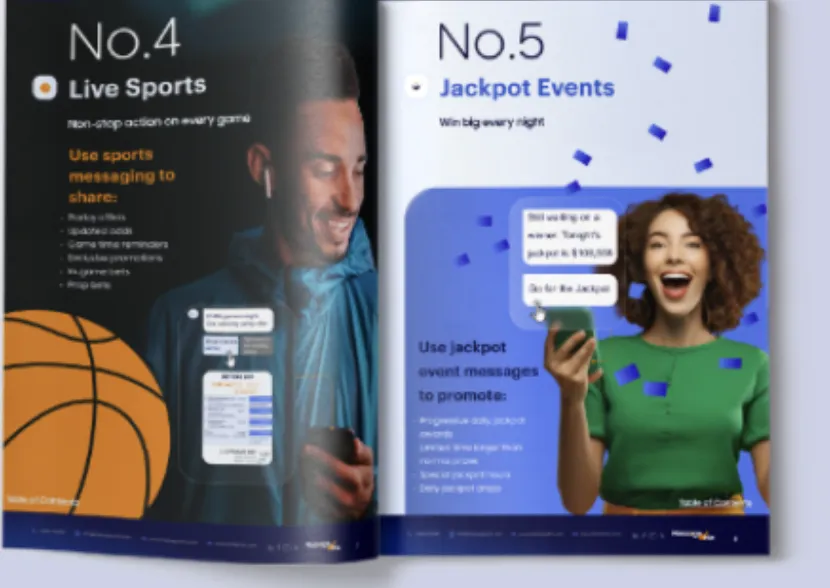
- Providing direct access to games through streaming links
- Creating bracket tournaments with continuous engagement updates
- Sending real time betting alerts during live games
Together, these strategies create a continuous engagement loop that encourages bettors to return to the platform throughout the tournament.
Provide Streaming Links to Bettors
One of the biggest drivers of live betting is simple access to the game itself. When bettors are actively watching the action, they are significantly more likely to place additional wagers.
Messaging makes that connection frictionless.
Sportsbooks can send bettors direct links to watch games through official streaming partners. These messages can be triggered based on user behavior, such as when a bettor has placed a wager on a specific matchup or when a game they previously bet on is about to begin.
For example, a sportsbook might send a message such as:
Tip off in 10 minutes: Kansas vs Michigan State. Watch live and follow in-game odds.
The message can include both the streaming link and a direct path back to the betting interface.
This type of engagement keeps bettors connected to the platform throughout the tournament and increases opportunities for live wagering.
Create Bracket Tournaments with Daily Updates
Bracket tournaments are one of the defining traditions of March Madness. Millions of fans fill out brackets every year, tracking their predictions as the tournament unfolds.
Sportsbooks can use messaging to turn bracket participation into a continuous engagement experience.
Instead of requiring users to check standings manually, platforms can send daily updates that include bracket progress, leaderboard changes, and links to relevant betting markets.
Examples of messaging triggers include:
- Daily bracket leaderboard updates
- Notifications when a major upset changes tournament standings
- Alerts when a bettor’s bracket moves into the top percentile
- Links to new betting markets based on upcoming matchups
These updates keep bettors returning to the platform throughout the tournament while connecting bracket engagement to new wagering opportunities.
Send Real Time Betting Alerts During Games
March Madness is known for dramatic momentum swings. A double digit lead can disappear in minutes, and a single buzzer beater can reshape an entire bracket.
These moments create ideal opportunities for live betting.
Messaging allows sportsbooks to respond instantly when something significant happens during a game. Instead of waiting for bettors to open the app, platforms can send targeted alerts when odds shift or when new betting opportunities appear.
Examples include:
- Odds boost alerts following a scoring run
- Notifications when a game enters overtime
- Halftime betting promotions
- Live prop bets tied to player performance
Because these alerts are delivered in real time, they bring bettors back into the platform precisely when engagement and excitement are highest.
Why Messaging Engagement Requires Tight CRM Integration
Delivering these types of real time interactions requires more than simply sending messages. It depends on deep integration between the messaging platform and the sportsbook’s CRM and customer data systems.
Sportsbooks rely on CRM platforms to store behavioral data such as betting history, preferred teams, wagering patterns, and engagement activity. When messaging platforms are tightly integrated with this data, sportsbooks can trigger highly personalized communications based on real time customer behavior.
For example, integration between CRM and messaging platforms enables:
- Messages triggered when a bettor’s team is about to play
- Live betting alerts based on previous wagering preferences
- Personalized bracket updates tied to tournaments a user joined
- Promotions triggered by betting activity or inactivity
Without this level of integration, messaging campaigns become generic broadcasts. With it, messaging becomes a highly responsive engagement channel that adapts to each bettor’s behavior.
This tight connection between messaging and customer data is one of the reasons messaging is increasingly viewed as core infrastructure rather than just a marketing tool.
Messaging Is Becoming a Revenue Engine for Sportsbooks
Major sporting events like March Madness create intense bursts of customer engagement. Sportsbooks that can respond quickly to those moments have a clear advantage.
Messaging allows operators to reach bettors instantly with relevant opportunities, whether that is a game reminder, a bracket update, or a live betting alert.
As sportsbooks continue to expand real time engagement strategies, messaging platforms that integrate closely with CRM systems are becoming a critical part of the betting technology stack.
Partnerships between messaging providers and CRM platforms help bring these capabilities together. For example, the integration between MessageWhiz and Optimove allows betting platforms to combine advanced customer data with multi-channel messaging to deliver personalized engagement during major sporting events.
Sportsbooks that treat messaging as infrastructure will capture more engagement, more bets, and more revenue. Those that do not will fall behind in the moments that matter most.
Talk to our team to learn more about the MessageWhiz+Optimove Integration, and how it can increase lifetime value of customers.
FAQ: Messaging and Sports Betting Engagement
Why do sportsbooks use messaging during major sporting events?
Sportsbooks use messaging channels such as Viber, SMS, WhatsApp notifications to reach bettors instantly during live games. These real time communications allow operators to promote betting opportunities, send odds updates, and encourage live wagering when engagement is highest.
How does messaging increase sports betting activity?
Messaging increases betting activity by keeping bettors connected to games and wagering opportunities. Alerts about live odds, bracket updates, and betting promotions bring users back to the sportsbook platform multiple times throughout a tournament.
Why is CRM integration important for sportsbook messaging?
CRM systems store customer data such as betting history, favorite teams, and engagement patterns. When messaging platforms are integrated with CRM systems, sportsbooks can trigger personalized messages based on bettor behavior and real time game events.
What messaging channels do sportsbooks typically use?
Most sportsbooks use a combination of Viber, SMS, and WhatsApp notifications to deliver promotions, betting alerts, and game updates during major sporting events.