











What Is WhatsApp for Enterprise?
WhatsApp for Enterprise refers to the use of the WhatsApp Business Platform (formerly the WhatsApp Business API) by large organizations to manage high-volume customer communication across sales, support, marketing, and service operations.
Unlike the standard WhatsApp Business app designed for small businesses, enterprise deployments enable organizations to integrate WhatsApp directly into their customer engagement infrastructure.
This allows businesses to automate conversations with chatbots, route messages to support agents, connect messaging data with CRM platforms, send transactional alerts and notifications, and manage large-scale messaging programs.
Enterprises typically access WhatsApp through messaging platforms or communication providers that handle infrastructure, compliance, and integration with existing systems.
This is part of a series of articles about WhatsApp for Business.
What are the Benefits of WhatsApp for Enterprises?
Enterprises increasingly adopt WhatsApp because it combines the reach of a global messaging platform with the capabilities of modern customer engagement systems.
Key benefits include:
- High engagement rates: WhatsApp messages often achieve open rates above 90%, far higher than traditional email or SMS messaging.
- Global customer reach: WhatsApp has more than two billion users across more than 180 countries.
- Real-time communication: Messaging allows businesses to respond immediately to customer questions and service requests.
- Conversational engagement: Customers interact with businesses through natural messaging conversations rather than static forms or support tickets.
- Automation and scalability: Chatbots and automated workflows allow enterprises to manage high volumes of customer interactions efficiently.
- Secure communication: End-to-end encryption protects message content and customer conversations.
For many organizations, WhatsApp becomes a central channel for customer engagement, service communication, and transactional messaging.
Enterprises typically access these capabilities through CPaaS providers that handle the underlying infrastructure, compliance, and integration required to run WhatsApp at scale
Why Enterprises Use WhatsApp
Enterprises adopt WhatsApp because it combines:
- Massive global reach
- Real-time conversational communication
- Automation and chatbot capabilities
- Integration with CRM and support platforms
- Secure encrypted messaging
Together, these capabilities allow organizations to deliver fast, personalized customer communication at scale.
What Features Does WhatsApp for Enterprise Offer?
The enterprise version of WhatsApp includes capabilities designed for high-scale communication, automation, and integration with existing business systems.
Scalability and Multi-Agent Support
Enterprise deployments allow organizations to manage conversations across large support teams and multiple departments.
Capabilities typically include shared team inboxes, intelligent message routing, agent collaboration tools, service-level agreement tracking, and full conversation history.
These features allow enterprises to operate WhatsApp as a full customer support channel similar to a helpdesk platform.
Automation and Chatbots
Automation is a critical component of enterprise messaging programs.
Organizations can deploy chatbots and AI-driven automation to manage routine interactions such as answering frequently asked questions, providing order status updates, guiding users through account workflows, and collecting customer information before handing the conversation to a support agent.
Automation reduces operational workload while ensuring customers receive immediate responses at any time of day.
CRM and Systems Integration
One of the defining characteristics of WhatsApp for Enterprise is its ability to integrate with existing business systems.
Common integrations include CRM platforms, customer data platforms, helpdesk and ticketing systems, marketing automation tools, ecommerce platforms, and payment systems.
These integrations enable businesses to personalize conversations based on customer data and maintain a unified view of customer interactions across channels.
Advanced Message Types
Enterprise WhatsApp programs support interactive message formats designed to simplify customer actions.
Examples include quick reply buttons, list menus, rich media messages, product catalog messages, call-to-action buttons, and location sharing.
Interactive messages help reduce friction in customer interactions by guiding users through predefined actions.
Security and Compliance
Security is a core component of the WhatsApp Business Platform.
Key protections include end-to-end encryption that protects message content, verified business profiles that confirm brand identity, message template approvals that ensure compliance with WhatsApp policies, and strict customer opt-in requirements for business messaging.
Enterprises should also implement additional internal protections such as securing webhooks, encrypting stored data, and minimizing the use of sensitive personal information in conversations.
What are Common WhatsApp for Enterprise Use Cases?
Enterprises use WhatsApp across multiple departments to support customer communication, notifications, and marketing engagement.
Customer Support and Helpdesk Automation
WhatsApp has become a widely adopted channel for customer support.
Support teams use WhatsApp to respond to customer inquiries, resolve technical issues, guide users through troubleshooting steps, and escalate complex conversations to human agents.
Messaging-based support often leads to faster response times and improved customer satisfaction.
Transactional and Service Alerts
Enterprises frequently use WhatsApp for transactional notifications and service updates.
Common examples include order confirmations, delivery notifications, payment receipts, appointment reminders, and account activity alerts.
These messages provide customers with timely information in a channel they check frequently.
Sales and Marketing Campaigns
Marketing teams increasingly use WhatsApp to deliver high-engagement promotional campaigns.
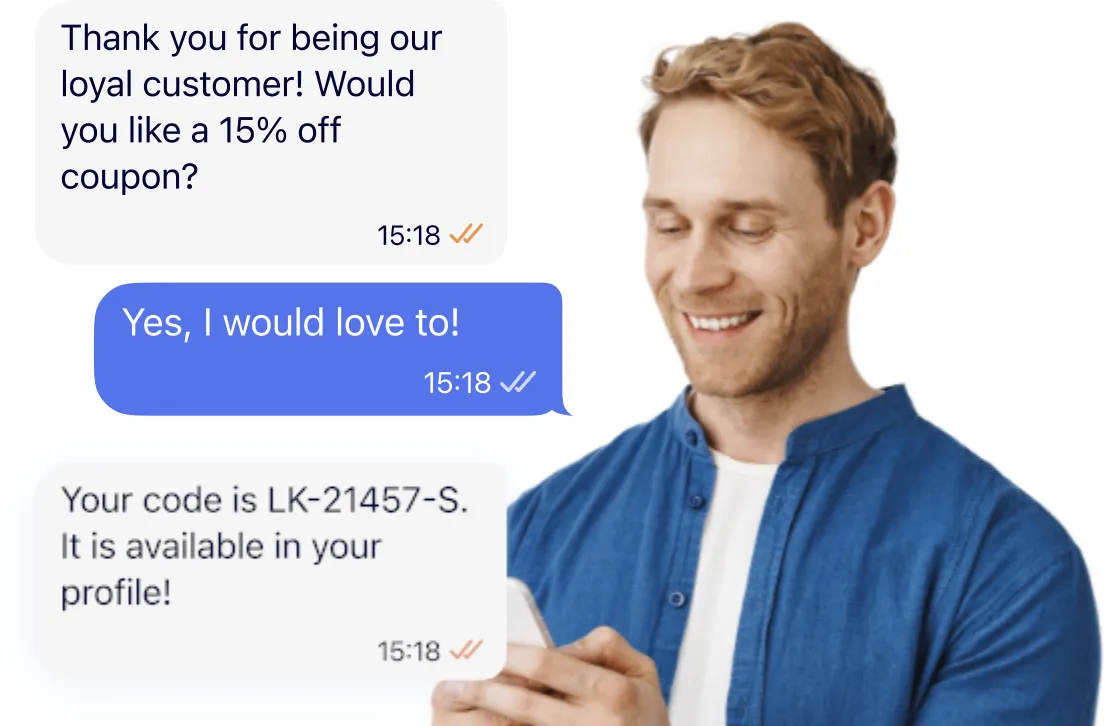
Examples include product announcements, personalized offers, abandoned cart reminders, event invitations, and loyalty program updates.
Because WhatsApp supports interactive messaging, campaigns can drive direct responses and conversions within the conversation.
For a deeper look at how to run effective campaigns on the platform, see our guide to WhatsApp marketing and when it delivers the strongest results.
Feedback and Surveys
WhatsApp messaging is also effective for collecting customer feedback.
Businesses can send satisfaction surveys, service rating requests, product feedback forms, and post-purchase review requests.
Short conversational surveys often generate higher response rates than traditional email surveys.
Omnichannel Engagement
For many enterprises, WhatsApp is part of a broader omnichannel customer communication strategy.
Organizations combine WhatsApp with other channels such as SMS, email, live chat, mobile push notifications, and voice messaging.
This allows businesses to deliver the right message through the right channel at the right moment in the customer journey.
In travel and hospitality specifically, WhatsApp for travel has become a key channel for managing bookings, itinerary updates, and guest communication.
Best Practices for Enterprise-Grade WhatsApp Programs
Successful WhatsApp programs require careful planning to ensure customer engagement remains relevant, compliant, and scalable.
Keep messages timely, personalized, and value-led
Customers expect messaging interactions to feel relevant and helpful. Use customer data and behavioral insights to ensure every message provides value.
Use interactive elements to reduce friction
Buttons, quick replies, and list messages simplify interactions and guide users through conversations.
Respect session windows and set up compliant re-engagement
WhatsApp enforces messaging rules around customer session windows. Businesses should use approved message templates when sending proactive notifications.
Centralize consent and frequency controls
Customers should have consistent messaging preferences across all channels. Centralized consent management prevents over-messaging.
Implement human handoff with service-level agreements
Automation should escalate complex conversations to human agents quickly and efficiently.
Secure webhooks, encrypt data, and minimize sensitive information
Enterprises should protect messaging infrastructure and customer data through strong security and compliance practices.
Frequently Asked Questions About WhatsApp for Enterprise
What is the difference between WhatsApp Business and WhatsApp for Enterprise?
The WhatsApp Business app is designed for small businesses that manage conversations manually. WhatsApp for Enterprise uses the WhatsApp Business Platform API, enabling automation, CRM integrations, multi-agent support, and scalable messaging programs.
Can enterprises automate WhatsApp conversations?
Yes. Enterprises can deploy chatbots, AI automation, and workflow engines to handle common customer conversations, provide immediate responses, and route complex inquiries to support agents.
Is WhatsApp secure for enterprise communication?
Yes. WhatsApp uses end-to-end encryption to protect message content. Enterprises should also implement additional security practices such as secure integrations, data protection policies, and compliance monitoring.
What industries use WhatsApp for Enterprise?
Industries that commonly use WhatsApp include ecommerce, travel and hospitality, financial services, telecommunications, healthcare, and gaming.
Why WhatsApp Is Important for Enterprise Communication
Messaging has become one of the most effective ways for businesses to communicate with customers. Platforms like WhatsApp allow organizations to provide immediate responses, deliver real-time notifications, and manage support conversations in a channel customers already use daily.
As messaging adoption continues to grow, WhatsApp is becoming a central component of enterprise customer engagement strategies.