













What Are CPaaS Solutions?
CPaaS, or communications platform as a service, refers to cloud-based frameworks that allow organizations to add real-time communication features such as voice, video, and messaging directly into their applications without building backend infrastructure or interfaces. These platforms provide programmable APIs, enabling businesses to enhance their digital offerings with integrated communication tools, making interactions faster for users and customers.
Traditional communication systems required significant investment in physical hardware and networks, as well as extensive development for each new channel or tool. CPaaS simplifies this process by providing ready-made communication building blocks that scale on demand. Companies in industries ranging from retail to banking leverage CPaaS for custom communication flows, improved engagement, and faster go-to-market capabilities, reducing both technical complexity and operational overhead.
What CPaaS Solutions Offer
Communication APIs
The foundational feature of any CPaaS solution is its suite of communication APIs. These APIs let developers embed capabilities such as SMS, voice calls, video conferencing, and even social media messaging with a few lines of code. They abstract away the complexity of telecom protocols, device compatibility, and network infrastructure, providing a unified interface for managing multiple communication channels.
Using these APIs, companies can move quickly to support new customer engagement methods, automate notifications, handle omnichannel messaging, or orchestrate multi-step communication workflows. This agility enables developers to focus on business logic and user experience while relying on the CPaaS provider for reliable, secure delivery across global networks.
Customization
CPaaS platforms offer extensive options, allowing businesses to craft user experiences. Developers can control message content, timing, routing, and personalization, aligning communications with branding, customer preferences, and business objectives. Features like IVR (interactive voice response), automated bots, and rich media messaging are all configurable within these frameworks.
Such customization enables companies to differentiate their digital services and improve engagement by targeting communications based on customer behavior or contextual data. For enterprises, this flexibility supports diverse use cases, from two-factor authentication to marketing campaigns or transactional notifications, all tailored at scale.
Integration
A key advantage of CPaaS is its ability to integrate with existing business applications, CRM systems, contact centers, and third-party tools. Most platforms provide SDKs, pre-built connectors, and comprehensive documentation for tying communications into broader digital ecosystems. This allows real-time exchanges such as appointment reminders or help desk responses to trigger automatically from core workflows.
Through integration, organizations can break down silos and unify customer journeys across platforms, ensuring responsiveness and consistency. Whether connecting with payment systems, help desk software, or analytics dashboards, CPaaS helps businesses unlock new efficiencies and deliver context-rich, timely communications.
Scalability
CPaaS platforms scale with customer needs. Whether supporting a startup with hundreds of monthly messages or an enterprise handling millions of transactions per day, these solutions dynamically allocate resources to match demand. This elasticity eliminates over-provisioning and reduces infrastructure spend, as clients only pay for what they use.
Scalability also means reliability. Most CPaaS providers offer built-in redundancy, global data centers, and service-level guarantees. Businesses can trust that their communication flows will perform under pressure, supporting everything from everyday customer contact to high-volume marketing events or urgent security notifications.
Common Use Cases of CPaaS Solutions
Retail and eCommerce
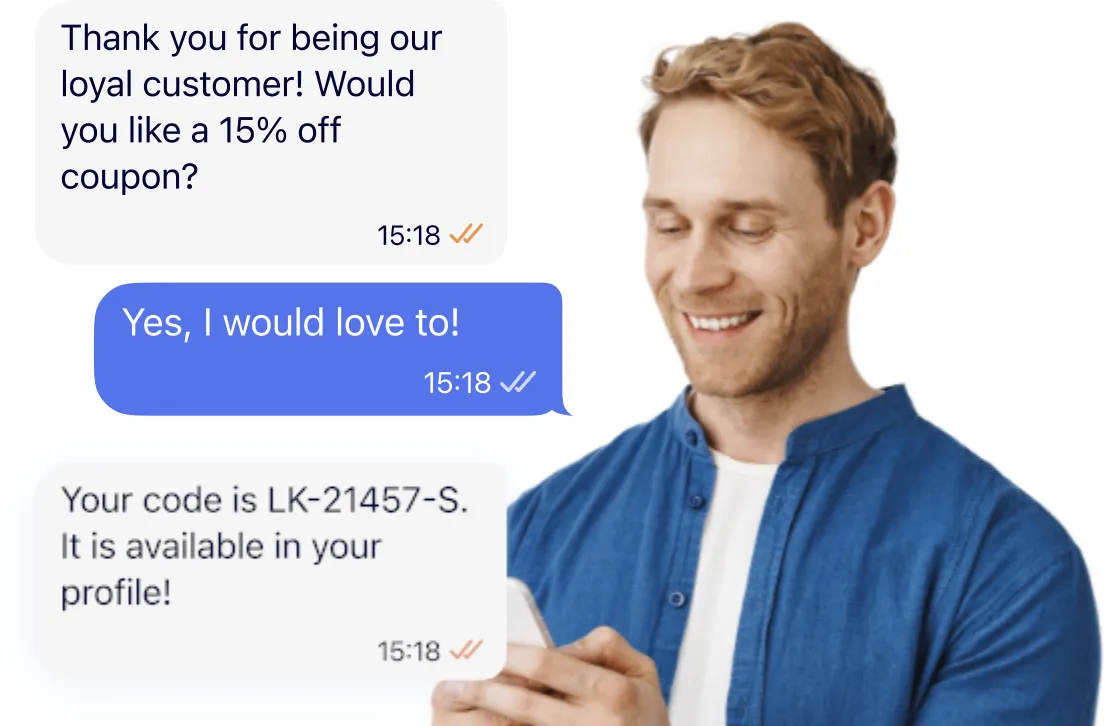
In the retail and eCommerce sectors, CPaaS solutions are widely adopted to enhance customer engagement and streamline operations. Retailers use programmable SMS, voice calls, and push notifications to deliver order confirmations, shipping updates, and promotional offers. Cart abandonment reminders, personalized discounts, and loyalty program communications are managed through automated messaging workflows, driving conversion and retention rates.
Additionally, CPaaS enables customer support through features like click-to-call, in-app chat, and video consultations. E-commerce businesses can provide proactive assistance, handle queries about products or delivery, and facilitate returns, all without the customer ever leaving their online platform. This integrated experience increases satisfaction and encourages repeat business.
Banking and Finance
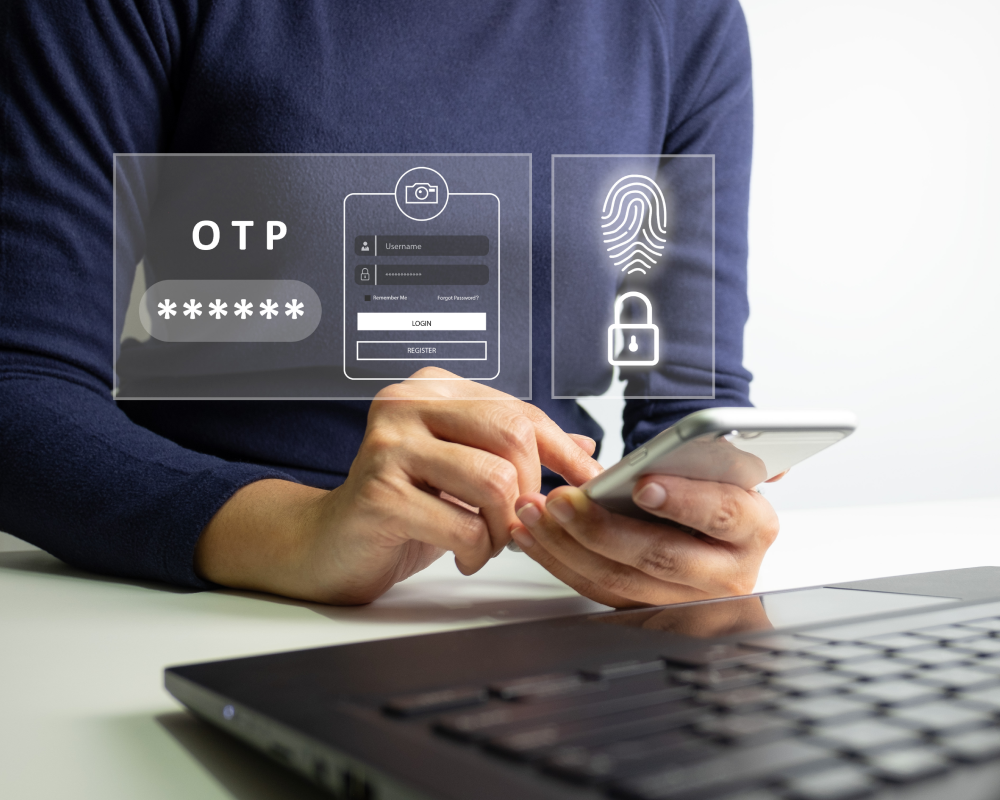
For banking and finance organizations, security and rapid information delivery are paramount. CPaaS platforms empower banks to send real-time transaction alerts, one-time passwords (OTPs) for account authentication, and compliance notifications via secure channels. Automated voice or text updates about account activity enhance transparency and let customers act quickly in case of suspicious transactions.
CPaaS also supports digital onboarding, allowing banks and fintechs to verify identities, answer queries through chatbots, and schedule video calls with advisors—all within secure digital channels. By integrating communications into online portals and apps, financial institutions improve customer trust and streamline common processes, while ensuring compliance with industry standards.
Customer Support
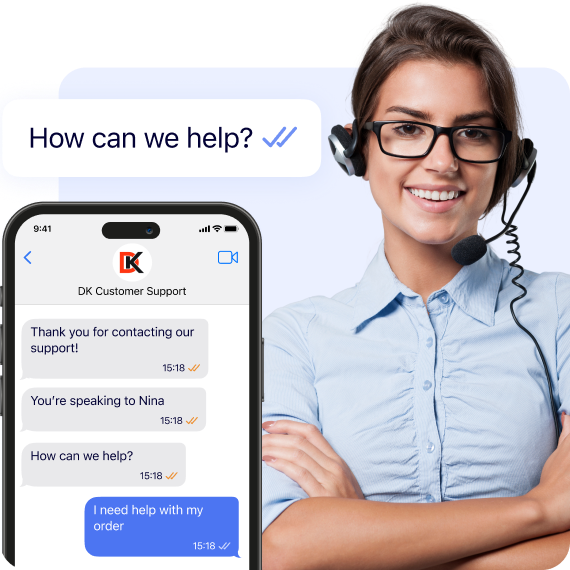
Modern customer support teams leverage CPaaS to deliver multichannel, context-rich assistance. Features such as programmable IVR, call routing, and chatbots let companies triage requests efficiently, reduce wait times, and provide round-the-clock support. Automated ticketing and follow-up notifications keep customers informed and improve service resolution rates.
With CPaaS, support agents can interact via the customer’s preferred method (e.g., voice, SMS, chat, or video) while accessing history and context from integrated CRM systems. This unified approach enables more effective interactions, less repetition, and quicker solutions, all of which increase customer satisfaction and loyalty.
IT and Security
In IT and security, CPaaS is indispensable for real-time notifications and incident response. Enterprises configure platforms to send automated alerts for outages, suspicious activity, or maintenance events across multiple channels, ensuring instant reach to key personnel. Two-factor authentication and secure password reset workflows are also commonly implemented via CPaaS APIs.
By embedding communication workflows into IT service management tools, organizations accelerate escalation and resolution of security incidents. CPaaS can deliver voice or text conference bridge links for critical response teams, automate status updates during major events, and provide audit trails for compliance, reducing risks and minimizing downtime.
Notable CPaaS Solutions
1. MessageWhiz

MessageWhiz is a performance-focused CPaaS solution that enables businesses to embed voice and messaging capabilities directly into applications while maintaining operator-grade control over delivery and routing. Unlike many CPaaS platforms that abstract communications behind third-party aggregators, MessageWhiz operates as a telecom transit operator, managing routing paths end to end. This approach delivers higher reliability, improved international deliverability, and more predictable performance for mission-critical communications.
Designed for both developers and business teams, MessageWhiz combines programmable APIs with built-in intelligence for monitoring, optimization, and orchestration. Its CPaaS offering supports high-volume, latency-sensitive use cases such as transactional messaging, customer engagement, authentication, and customer support. By embedding AI across routing, analytics, and interaction insights, MessageWhiz allows organizations to move beyond basic connectivity and actively optimize communication outcomes in real time.
Key CPaaS capabilities include:
- Programmable messaging and voice APIs: APIs for SMS, voice calling, and WhatsApp enable developers to embed communications into applications, workflows, and customer journeys with minimal overhead
- Operator-grade global routing and interconnects: Direct control over telecom routing as a transit operator, delivering higher completion rates, lower latency, and stronger international performance than reseller-based CPaaS solutions
- AI-driven routing and delivery optimization: AI continuously analyzes traffic patterns, destination performance, and network conditions to optimize delivery paths dynamically
- Omnichannel orchestration: Coordinate voice, SMS, and WhatsApp interactions from a unified platform, supporting seamless handoffs and consistent customer experiences across channels
- Advanced analytics and real-time monitoring: Visibility into delivery success, failure reasons, latency, and throughput via real-time dashboards and historical reporting
- AI-powered sentiment and interaction insights: Analyze conversations to detect sentiment trends and experience risks, helping teams identify issues and improve communication effectiveness
- Event-driven integrations: Webhooks and callbacks support real-time automation and integration with CRM, support, and operational systems
- Scalable, secure cloud infrastructure: Built to handle high-throughput traffic with redundancy, compliance support, and enterprise-grade reliability
Why MessageWhiz stands out among CPaaS solutions
While many CPaaS platforms focus primarily on providing communication building blocks, MessageWhiz differentiates by combining programmability with direct telecom control and AI-driven optimization. This makes it particularly well suited for organizations where communication performance directly impacts revenue, customer experience, or security, and where visibility and control matter as much as flexibility.
2. Twilio

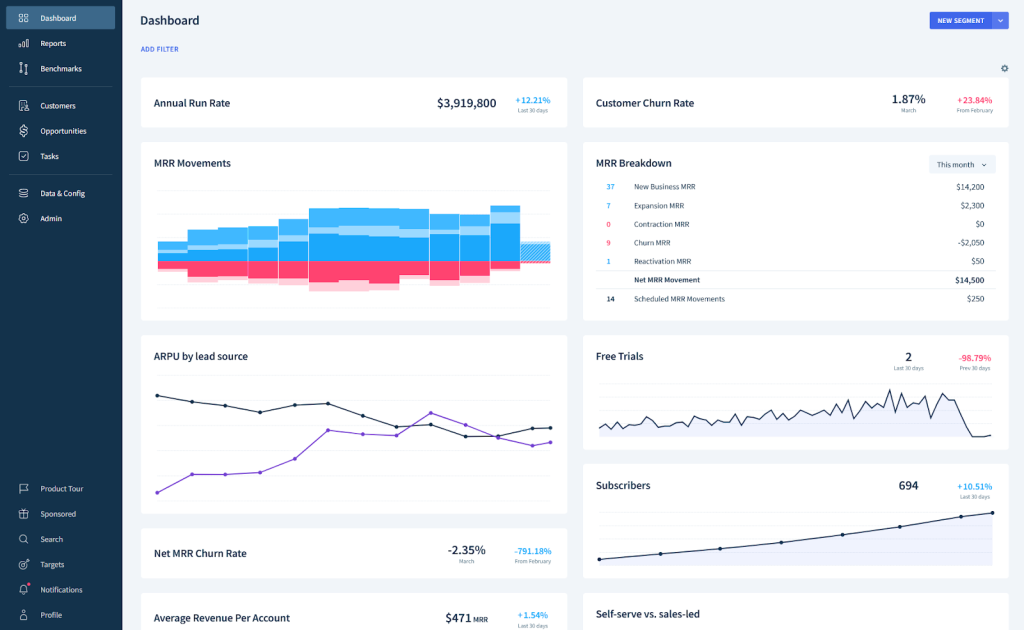
Twilio CPaaS provides APIs for messaging, voice, video, email, and verification. It abstracts carrier networks and compliance, offers SDKs and onboarding resources, and offers coverage in 180+ countries.
Key features include:
- Multichannel communications APIs: Provides APIs to embed SMS, MMS, RCS, WhatsApp, voice, video, email, and user verification into applications.
- Global scale and coverage: Supports communications at large volumes with coverage across over 180 countries, handling volume spikes while maintaining low latency and deliverability by managing global carrier networks and regulatory complexity.
- Identity verification and fraud prevention: Provides authentication and identity capabilities using mobile signals, real-time context, and proprietary detection models to validate users, reduce fraud risk, and protect communication workflows across channels.
- Developer onboarding and tooling: Offers guided onboarding, multichannel APIs, SDKs, and documentation so teams can start quickly, prototype solutions, and scale implementations without building telecom infrastructure or complex regional integrations.
- Notifications and alerts: Enables building flows for appointment reminders, mass notifications, security alerts, purchase confirmations, account confirmations, and similar event-driven communications delivered across supported messaging channels.
Source: Twilio
3. RingCentral

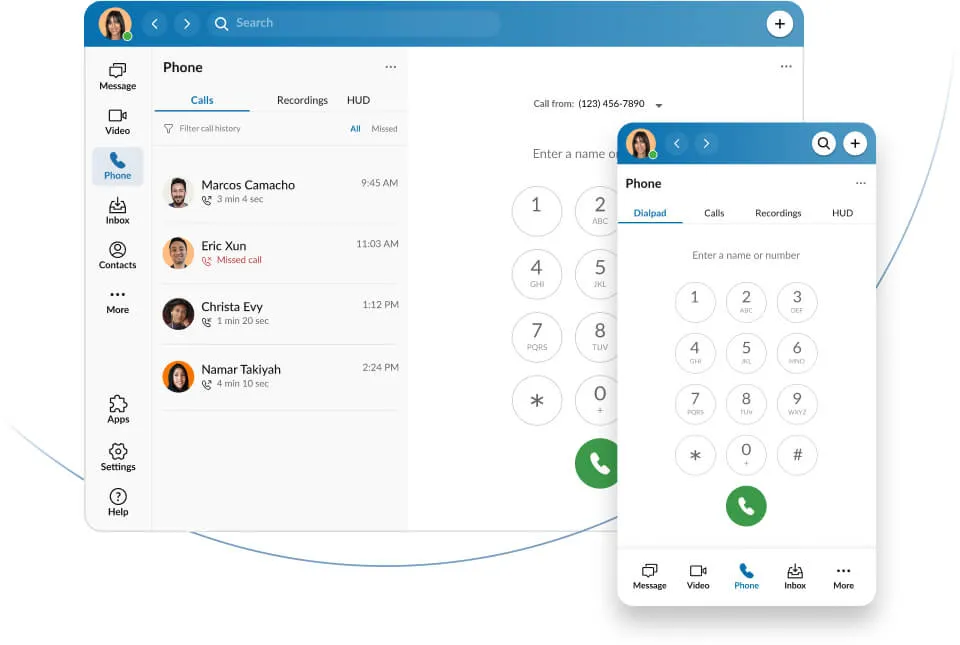
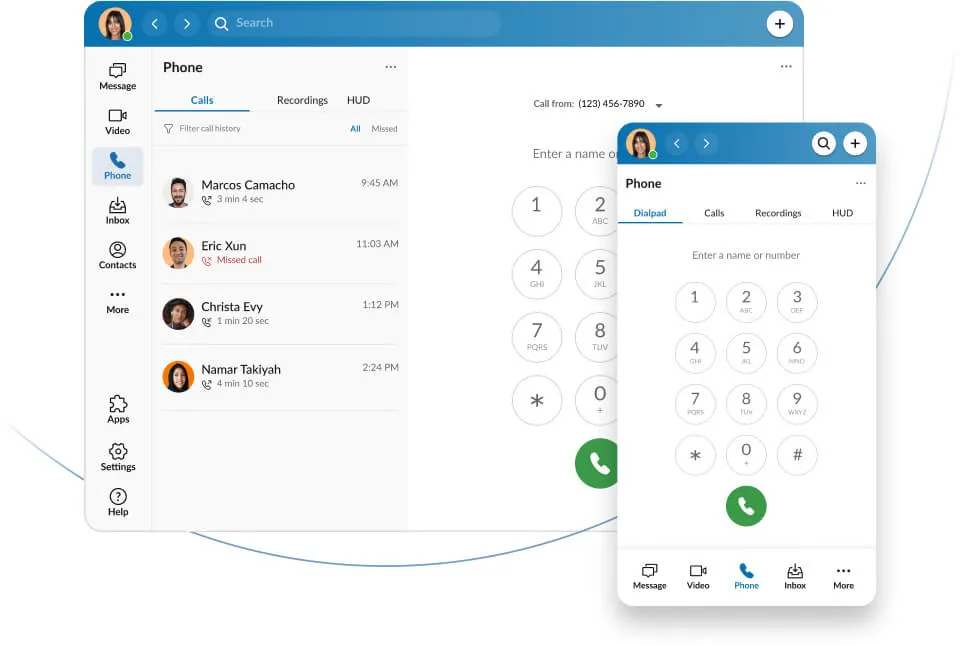
RingCentral provides an AI virtual assistant and access to calls, messages, and meetings through the RingCentral App, alongside administrative and billing portals.
Key features include:
- Unified app access: The RingCentral App provides access to calls, messages, and meetings, centralizing daily communications tasks within one application environment for users across the organization.
- Events management: Offers RingCentral Events for planning and managing events, indicating extended communications scenarios beyond day-to-day calling and messaging, with a dedicated sign-in and account experience.
- Administrative controls: Provides an Admin Portal for accessing and managing account settings, enabling administrators to configure and oversee service parameters and user experiences across the platform.
- Billing management: Includes a Billing Portal to access and manage billing information, supporting operational oversight and account administration functions for communications services and associated charges.
Source: RingCentral
4. NiCE CXone

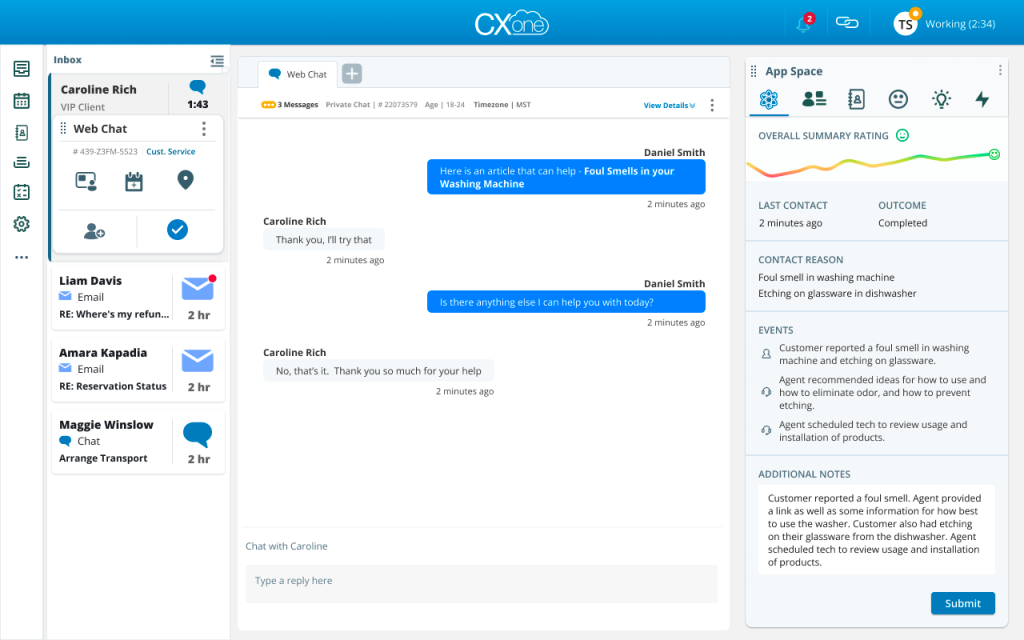
NiCE CXone Mpower is a customer experience platform that orchestrates human and AI agents, offers prebuilt integrations and open APIs, runs on a secure cloud with 40+ apps, and emphasizes trust, compliance, and SLAs.
Key features include:
- Conversational and agentic AI: Orchestrates human and AI agents with CXone Mpower and Cognigy AI to automate service, augment employee work, and scale conversational experiences consistently across customer touchpoints.
- Prebuilt integrations and open APIs: Provides pre-built integrations, open APIs, and tools that connect systems quickly, enabling faster deployments and keeping existing business processes moving without extensive custom development.
- Cloud architecture and apps: Runs on a secure, reliable cloud architecture offering over 40 applications, designed to optimize and scale operations while consolidating customer experience capabilities.
- Knowledge management and optimization: Activates AI-powered enterprise knowledge and synthesizes customer conversations to uncover automation opportunities, improve self-resolution rates, and identify areas for optimization.
Source: NICE
5. Infobip

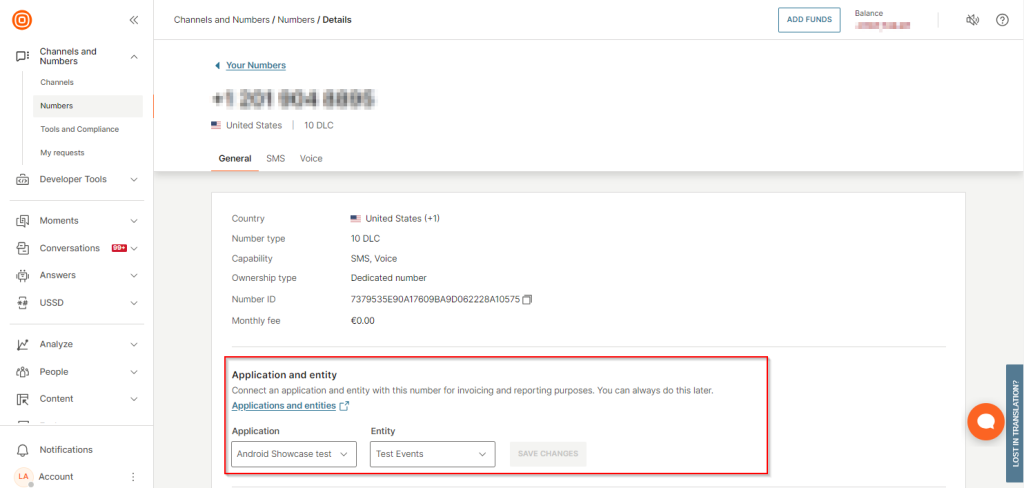
Infobip CPaaS X is a modular API stack that unifies channels under a single API, automates onboarding and provisioning, supports per-client configuration and reporting, and combines global carrier connectivity with local compliance expertise.
Key features include:
- Unified Messages API: Unifies SMS, RCS, and chat apps under a single Messages API, handling channel sequencing and automatic failover so content remains unchanged while delivery paths adapt to conditions.
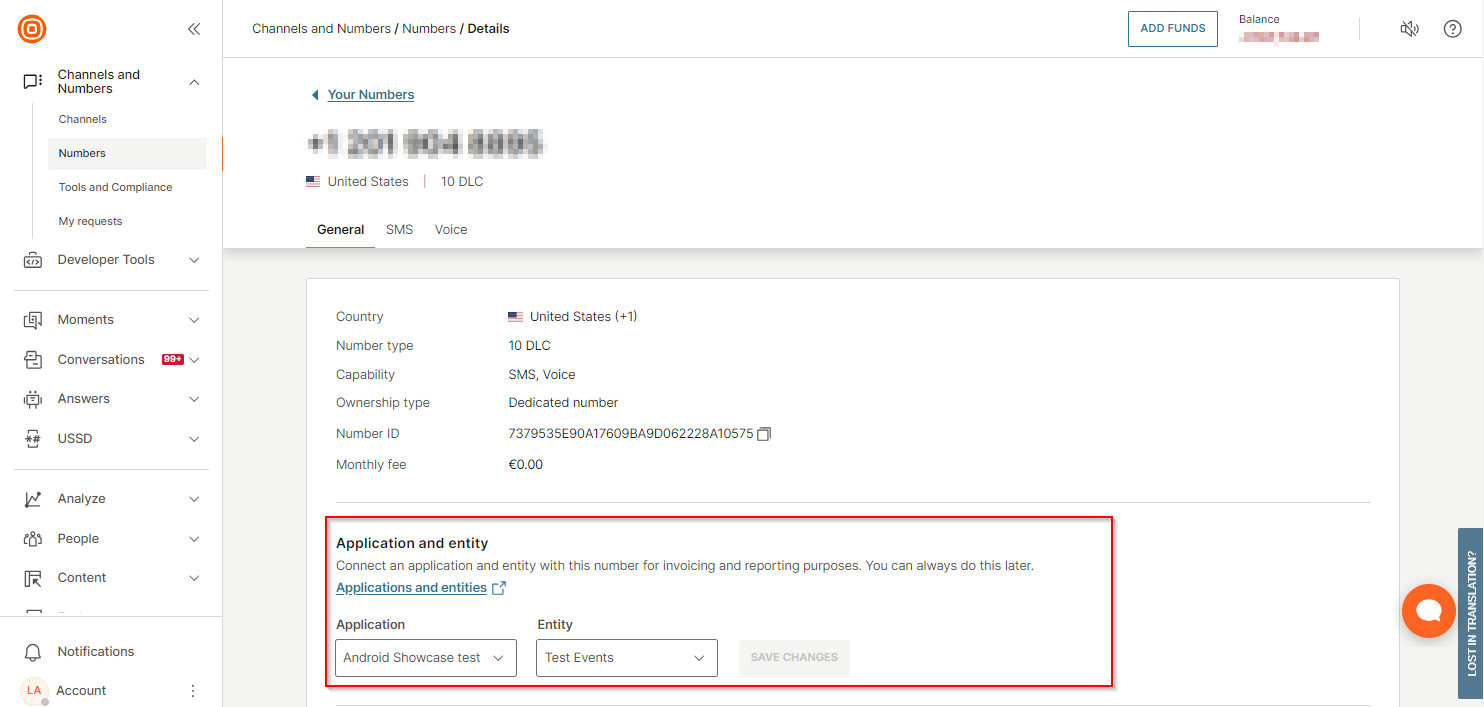
- Granular automation APIs: Introduces APIs for automating resource provisioning, campaign registration, and client-specific consumption reporting, reducing manual operational tasks and improving visibility into usage at defined customer or use-case levels.
- Automated onboarding and numbers: Enables automated client onboarding and phone number provisioning to accelerate activation.
- Per-client configuration and reporting: Configures each client as an individual entity, supports bespoke environments, and delivers granular reporting per customer, use case, or resource, with event subscriptions for only the notifications required.
- Global reach and compliance expertise: Over 80 offices and 800 carrier connections, with local compliance and legal knowledge to align channels with regional requirements.
Source: Infobip
Conclusion
CPaaS solutions have reshaped how businesses communicate by embedding voice, messaging, and video directly into applications through APIs. They reduce complexity, enhance scalability, and support rapid innovation in customer engagement. As digital transformation accelerates, CPaaS platforms offer the flexibility and reliability organizations need to deliver real-time, personalized, and efficient communications across multiple channels.