
















What Is Cloud Contact Center Software?
Cloud contact center software, also known as CCaaS, is a cloud-based platform that allows companies to manage customer communications across various channels like voice, email, chat, and social media. These solutions offer benefits such as scalability, lower upfront costs, and remote access for agents, and they typically include features like automatic call distribution (ACD), interactive voice response (IVR), and analytics. Many modern platforms use AI to provide advanced features like chatbots, call recording, and performance optimization.
Key features include:
- Omnichannel support: Manage customer interactions across various channels, including voice, SMS, email, and social media, in a single, unified platform.
- Automatic Call Distribution (ACD): Routes incoming calls to the most appropriate available agent based on factors like skill and availability.
- Interactive Voice Response (IVR): Automates call answering and provides self-service options or routes calls to the right department before a live agent is needed.
- AI and automation: Uses artificial intelligence to power features like virtual agents (chatbots), predictive dialers, and AI-driven analytics to improve efficiency and customer experience.
- Analytics and reporting: Provides data and reports on key metrics to help supervisors monitor performance and identify areas for improvement.
- Call recording: Records calls for quality assurance, agent training, and compliance purposes.
- Integrations: Connects with other business applications, such as customer relationship management (CRM) systems, to provide a more comprehensive view of the customer.
This is part of a series of articles about call center solutions
Core Capabilities of Cloud Contact Center Software
1. Omnichannel Support
Omnichannel support is crucial in modern contact center platforms as it allows agents to handle interactions from multiple channels, such as voice calls, SMS, chat, email, and social messaging apps, within a unified interface. This integration ensures customers receive consistent service, no matter how they reach out, and enables transitions between different channels during a conversation.
Agents can view the interaction history across all channels, reducing repetitive questions and improving first-contact resolution rates. An omnichannel approach also enables supervisors to monitor performance and customer satisfaction holistically, rather than in isolated silos. This visibility provides insights into how various channels contribute to the overall customer experience.
2. Automatic Call Distribution (ACD)
Automatic call distribution (ACD) is a core function that routes incoming calls to the most suitable agent or queue based on predefined criteria, such as agent skills, caller history, or current workloads. Effective ACD systems minimize wait times and connect customers with agents who are best equipped to handle their inquiries, enhancing efficiency and customer satisfaction.
Modern cloud-based ACD systems are highly configurable and often integrate with other tools, like CRM systems, to leverage additional context and data for more precise routing. These solutions can adapt dynamically to changes in call volume and agent availability, helping maintain service levels even during peak periods.
3. Interactive Voice Response (IVR)
Interactive voice response (IVR) systems interact with callers using pre-recorded menus and prompts, allowing users to navigate options or perform self-service actions via voice or keypad inputs. In cloud contact centers, IVR systems automate common tasks such as balance inquiries, ticket status checks, or payment processing, improving efficiency and reducing the need for live agent assistance for straightforward requests. IVRs also collect data before routing calls, enabling agents to better prepare for customer conversations.
Cloud-based IVR solutions are typically more flexible than their on-premise counterparts, making it easier to update menus, integrate with back-end data sources, or introduce speech recognition capabilities. Businesses can design personalized call flows, link IVR steps to customer account records, and use analytics from IVR usage to identify pain points and optimize scripts.
4. AI and Automation
AI and automation in cloud contact center software introduce intelligent features that enhance customer engagement, streamline operations, and increase agent productivity. Examples include chatbots for handling routine inquiries, natural language processing for understanding customer intent, and predictive analytics for next-best-action recommendations. These tools enable 24/7 support, deliver instant responses to common questions, and free human agents to tackle more complex issues.
Beyond customer-facing tools, AI drives operational improvements such as automated call summarization, real-time sentiment analysis, and workforce optimization. Automation can handle repetitive tasks like data entry or post-interaction follow-ups, reducing manual effort and errors.
5. Analytics and Reporting
Analytics and reporting engines built into cloud contact center software provide real-time and historical insights into agent performance, customer satisfaction, channel usage, and operational efficiency. Supervisors can access customizable dashboards to monitor KPIs such as average handle time, first-contact resolution, abandonment rates, and customer sentiment.
The flexibility of cloud platforms allows analytics to be tailored by department, campaign, or individual agent. Advanced solutions often enable integration with business intelligence tools for deeper analysis or consolidated reporting across multiple systems.
6. Call Recording
Call recording is a standard feature in cloud contact center software, providing organizations with a way to capture, store, and review voice interactions between agents and customers. Recordings are used primarily for quality assurance, compliance auditing, dispute resolution, and agent training. With cloud platforms, recordings can be accessed on demand, indexed by metadata, and secured according to compliance requirements.
Advanced call recording tools enable features such as automatic transcription, keyword search, and sentiment analysis, increasing the usability of stored conversations. Managers can review targeted calls to identify best practices or coach agents on areas for improvement..
7. Integrations
Integrations are crucial for maximizing the value of cloud contact center software, allowing connectivity with other business applications such as CRM systems, helpdesks, workforce management tools, and productivity suites. This connectivity ensures that agents have real-time access to customer data and interaction histories, enabling more personalized service and reducing time spent searching for information across isolated systems.
Cloud platforms are typically designed with open APIs and pre-built connectors, simplifying the process of integrating with both legacy and modern tools. Well-integrated environments improve workflow automation, support omnichannel experiences, and offer consistent data across all customer touchpoints.
How Cloud Contact Center Software Works
Cloud contact center software runs entirely over the internet using infrastructure managed by a third-party provider. Instead of relying on traditional telephony hardware, it uses voice over internet protocol (VoIP) to handle calls and messages. This means that audio, chat, and other communication data are converted into digital packets and transmitted over IP networks rather than legacy phone lines.
Agents access the platform through a browser-based interface or desktop application. All communication channels (voice, email, SMS, chat, and social media) are integrated into a single workspace. Incoming customer interactions are routed automatically using omnichannel routing logic, which assigns tasks to the most appropriate agent based on availability, skill, and interaction history.
The backend infrastructure is hosted in remote data centers, removing the need for on-site servers or PBX systems. All processing, such as call routing, IVR prompts, call recording, and real-time analytics, happens in the cloud. Integrations with CRM and helpdesk tools ensure that customer data is available at every touchpoint, enabling agents to deliver personalized, context-aware service from any location with internet access.
Related content: Read our guide to smart call center
Cloud Contact Center Software vs. On-Premise Contact Center
Cloud contact center software differs significantly from on-premise solutions in terms of deployment, maintenance, and flexibility. With a cloud contact center, the service provider manages the hardware, software, and infrastructure, drastically reducing the need for in-house IT expertise and upfront capital expenses. On-premise contact centers require purchasing and maintaining servers, telephony hardware, and network infrastructure, leading to higher costs and longer deployment timelines.
Cloud platforms offer superior flexibility, enabling rapid scaling to meet demand, accommodating remote and hybrid workforces, and facilitating continuous innovation through regular software updates. On-premise systems are slower to adapt, often face challenges integrating with new digital channels, and demand periodic investments for upgrades. While regulated industries may occasionally require on-premise solutions for strict compliance, cloud contact center software is increasingly preferred for its cost efficiency, agility, and support for a modern, distributed workforce.
Notable Cloud Contact Center Software
1. MessageWhiz

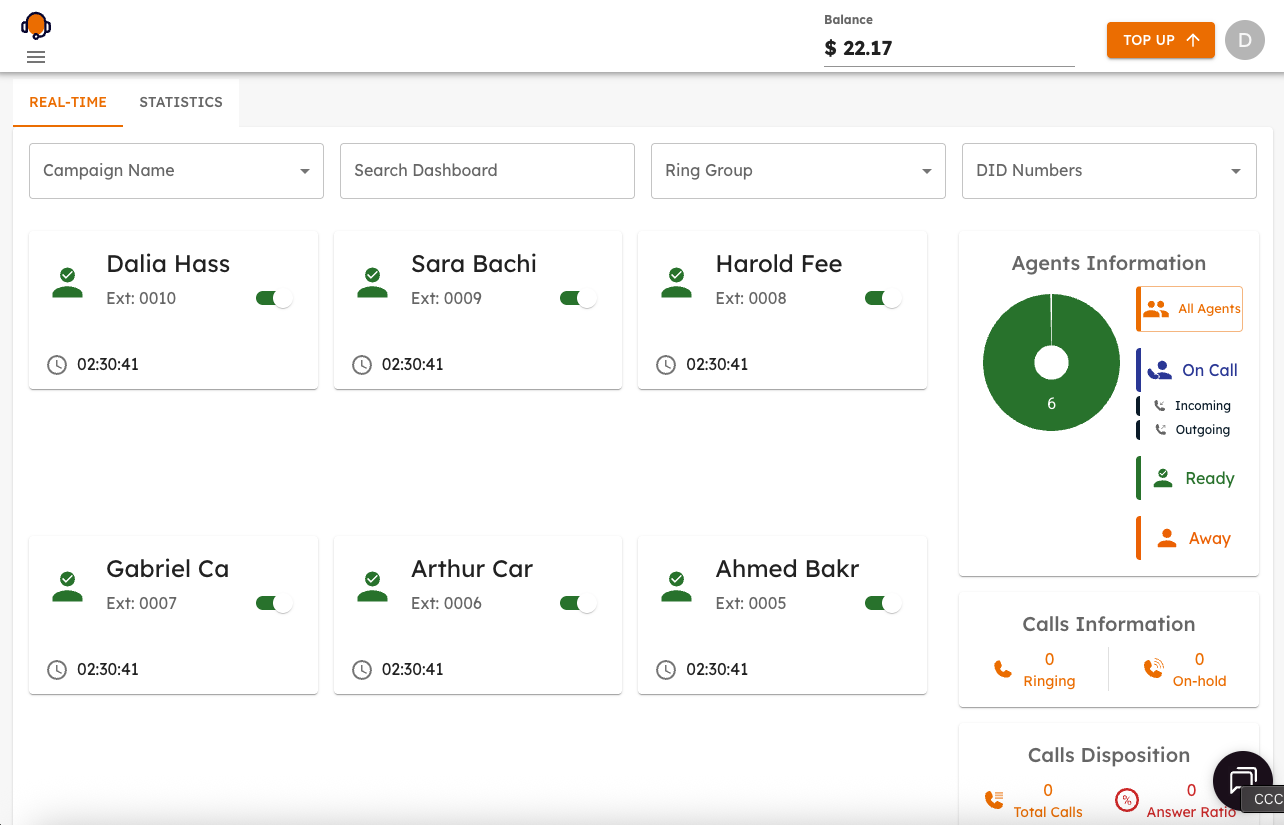
MessageWhiz Call Center Connect is a cloud-based contact center solution designed for organizations that prioritize reliable delivery, omnichannel flexibility, and seamless integration with existing business systems. Rather than forcing teams into a closed, monolithic platform, Call Center Connect extends enterprise-grade voice capabilities into a broader messaging-first ecosystem.
Call Center Connect is designed to integrate easily into existing environments rather than replace them. With open APIs and pre-built integrations, it connects directly to CRMs, booking systems, customer data platforms, and operational tools. Agents and supervisors gain real-time access to customer data and interaction history without switching systems, enabling faster resolution and more personalized conversations.
Key features include:
- Omnichannel voice and messaging: Supports inbound and outbound voice alongside SMS, WhatsApp, Viber, Telegram, RCS, email, and additional digital channels, allowing organizations to manage real-time conversations across customer-preferred touchpoints.
- Intelligent routing and delivery optimization: Uses dynamic routing logic to select optimal voice and messaging routes based on geography, performance, availability, and cost, improving reliability and reach compared to static routing models.
- API-first architecture: Provides open APIs and webhooks to integrate voice and messaging workflows directly into CRMs, booking systems, customer data platforms, and operational tools without requiring platform replacement.
- Unified customer context: Surfaces customer data and interaction history across voice and messaging channels, enabling agents to handle conversations with full context and reduce resolution times.
- Global communications infrastructure: Leverages MessageWhiz’s carrier-grade messaging network to support international operations with high delivery rates and consistent performance across regions.
- Flexible deployment model: Supports inbound, outbound, and hybrid contact center use cases, allowing organizations to start with voice and expand into messaging-driven engagement as needs evolve.
2. Talkdesk

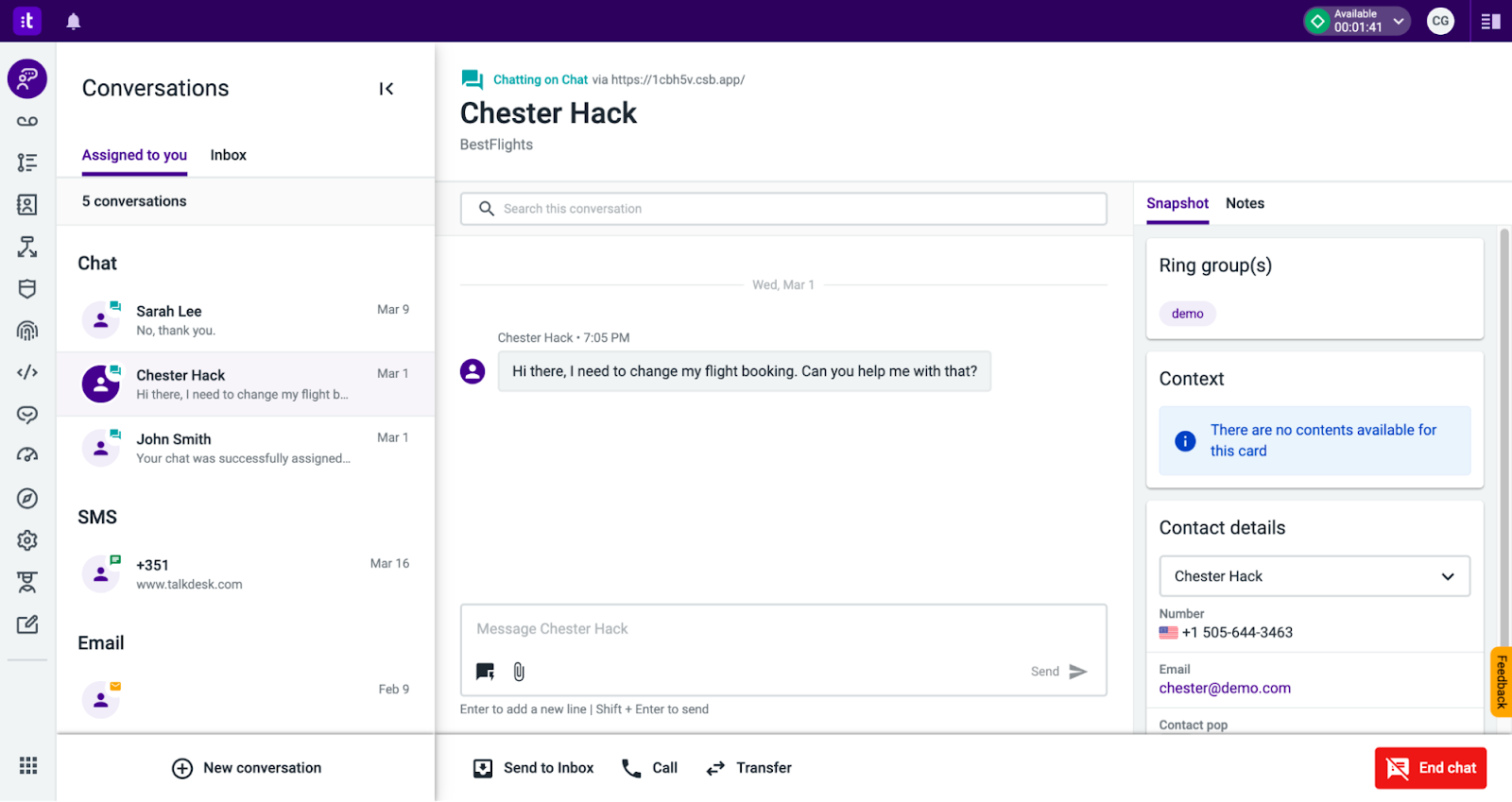
Talkdesk offers a cloud-native contact center platform with orchestration across AI agents, flexible deployment choices, and tools for building, routing, and reporting. It includes global connectivity, developer tooling, and a partner marketplace.
Key features include:
- Multi-agent orchestration: Coordinates specialized AI agents across customer-facing and operational layers to discover, build, orchestrate, and measure workflows, targeting moments that influence service levels, costs, and loyalty.
- Flexible deployment options: Uses microservices architecture to support BYOC, hybrid storage models, and regional data residency, allowing organizations to align telephony, storage, and location choices with requirements.
- Security and compliance: Supports 30+ certifications, including SOC 2/3, ISO 27001, PCI DSS Level 1, HIPAA, and GDPR, plus multifactor authentication and integrations to mitigate internal and external risks.
- Global communications network: Provides enterprise-grade uptime and worldwide coverage through high-quality call routes and data centers distributed across regions to maintain reliability and call quality.
- Low-, no-, and custom-code tools: Supplies APIs, SDKs, and builders to customize workspaces, routing, reporting, and integrations without heavy engineering involvement, accelerating configuration changes.
3. Five9

Five9 provides cloud contact center software that supports voice and digital channels. It emphasizes collaborative intelligence, AI, automation, and cloud delivery to manage interactions and streamline operations across distributed teams.
Key features include:
- Omnichannel engagement: Supports customer interactions on preferred channels and centralizes management so agents can handle conversations consistently across voice and digital within a single platform experience.
- Collaborative intelligence: Combines human agents with AI-driven assistance to coordinate tasks and decisioning across customer service workflows, aiming to maintain context and accelerate resolutions.
- Practical AI: Uses AI capabilities to interpret intent, automate repetitive steps, and surface suggestions during live interactions, reducing manual effort for common tasks and follow-ups.
- Workforce optimization: Provides tools to evaluate interactions, schedule staff, and monitor quality so supervisors can analyze performance and adjust staffing or coaching plans.
- Cloud architecture: Provides vendor-managed infrastructure, removing on-premise hardware dependencies and simplifying updates, scaling, and remote access for contact center teams.
4. NICE CXone

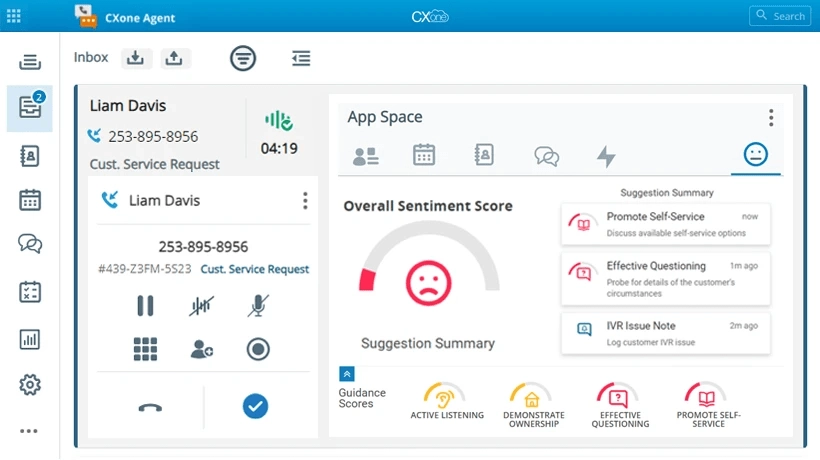
NICE CXone (CXone Mpower) is a cloud contact center platform focused on channel coverage, quality controls, and analytics. It supports inbound and outbound strategies, integrates with CRMs, and includes an IVR designed for high-volume handling.
Key features include:
- Channel coverage: Integrates multiple communication methods into a single environment to coordinate interactions across touchpoints while maintaining consistency and context throughout the customer journey.
- Analytics and reporting: Provides reporting and analysis to assess performance, track outcomes, and inform changes to contact handling and operational practices.
- Cloud-native platform: Supports scalability for variable demand and distributed operations across regions and time zones.
- High-volume IVR: Tailors IVR for large call volumes to simplify processes, collect information upfront, and route contacts effectively during peak periods.
5. RingCentral Contact Center

RingCentral Contact Center is a cloud-based platform designed to support inbound and outbound customer interactions across digital and voice channels. It provides scalability, routing intelligence, and integration with RingCentral’s broader communication ecosystem.
Key features include:
- Omnichannel routing: Routes voice, chat, email, SMS, and social media interactions through a unified interface, enabling agents to handle all communication types without switching systems.
- Advanced IVR and ACD: Offers configurable IVR menus and skills-based ACD to route customers efficiently based on intent, history, or agent capabilities.
- Workforce engagement tools: Includes capabilities for scheduling, forecasting, and quality management to optimize staffing levels and support agent performance.
- CRM and UC integration: Integrates with major CRM systems and RingCentral’s unified communications platform, giving agents access to context-rich customer data and internal collaboration tools.
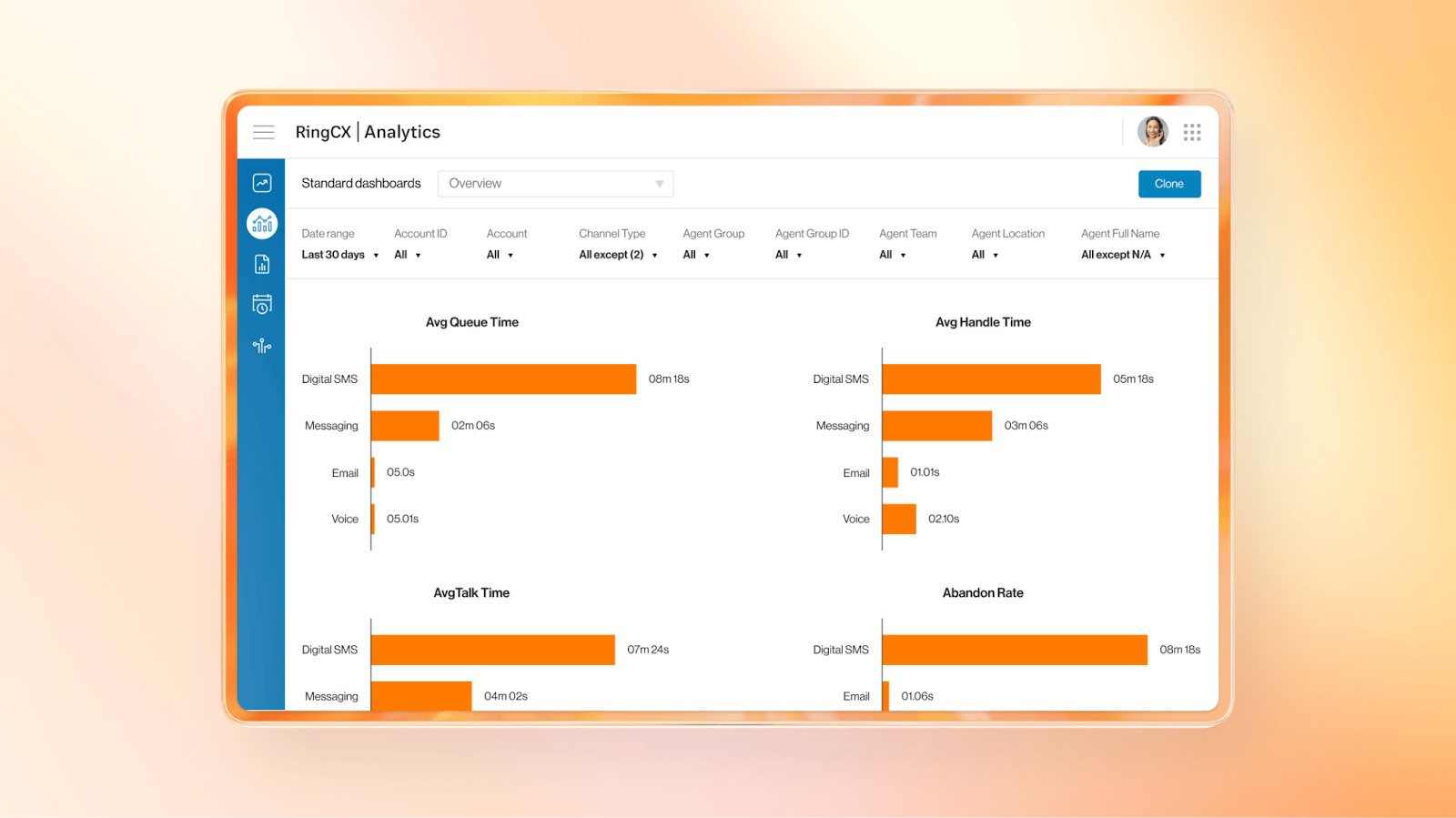
- Customizable analytics: Provides real-time dashboards and historical reporting to track performance metrics like handle time, resolution rates, and service levels.
6. Twilio Flex

Twilio Flex is a programmable contact center platform with a single UI across channels. It supports customization, integrations, and deployment options, including per-agent-hour pricing and bring-your-own-carrier for telephony.
Key features include:
- Single interface: Presents one UI for all channels and applications to centralize agent workflows and reduce context switching during live interactions and after-call tasks.
- Broad channel support: Handles WhatsApp, Facebook Messenger, Google’s Business Messages, SMS, web chat, phone, and email so teams can engage customers on preferred communication methods.
- Customizable reporting: Offers configurable dashboards and reporting through Flex Insights to track KPIs and monitor contact center performance across queues, teams, and time periods.
- Custom IVR and routing: Enables custom self-service IVRs and intelligent routing with escalation and fallback rules to direct tasks to appropriate agents automatically.
- Integrations and BYOC: Integrates with CRMs, ERPs, and internal systems, and supports bringing existing PSTN carriers and numbers to maintain current telephony arrangements.
7. Voiso

Voiso is a cloud-based contact center platform to unify voice and digital channels, optimize outbound performance, and enhance support workflows using AI-powered tools. It supports both inbound and outbound use cases.
Key features include:
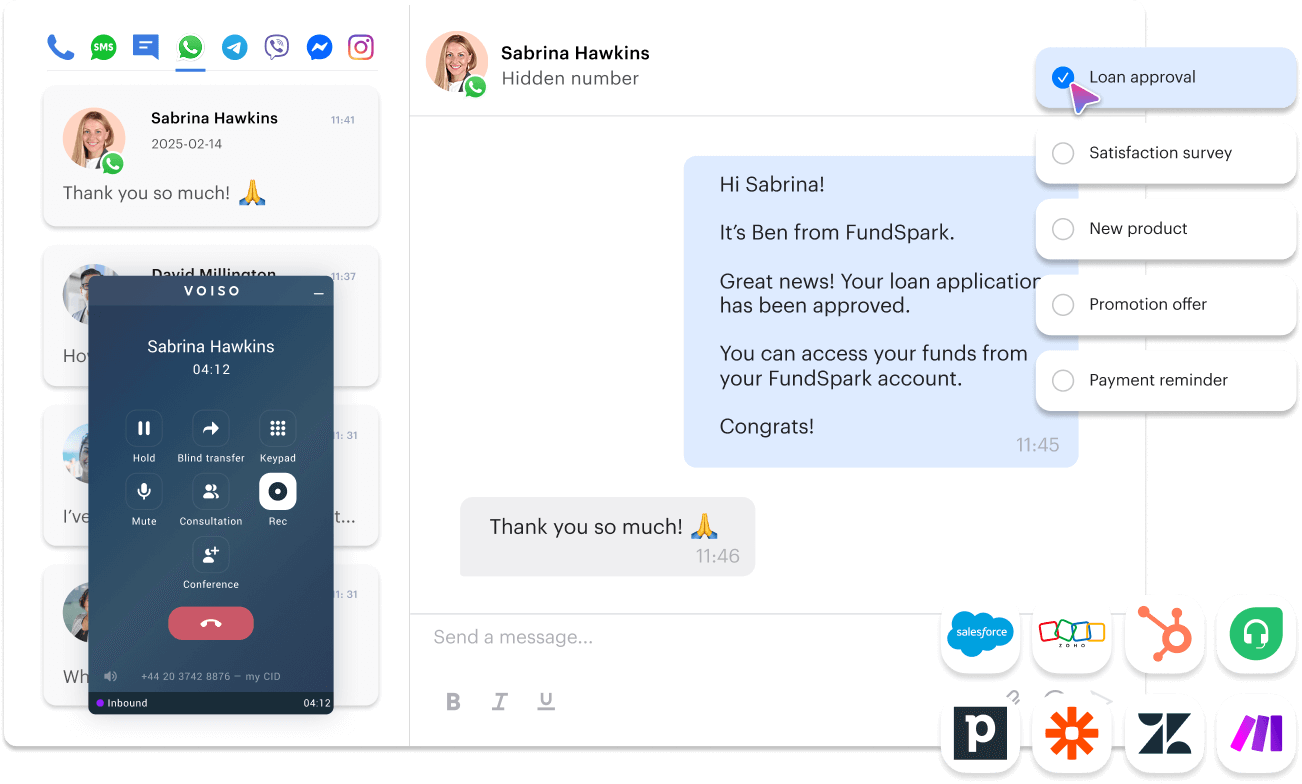
- Omnichannel engagement: Consolidates voice, SMS, chat, and messaging apps into a single platform, allowing agents to manage all customer interactions through one interface.
- AI predictive dialer: Automatically dials numbers based on agent availability, reducing idle time and increasing the number of live connections during outbound campaigns.
- AI speech analytics: Transcribes and analyzes conversations to detect sentiment, extract key topics, and provide actionable insights to improve agent coaching and customer experience.
- Flow Builder: Enables creation of custom call flows using a no-code interface, supporting IVR design, routing, and integration with CRMs and other systems.
- Remote agent support: Provides cloud-based tools for managing distributed teams, with features like real-time monitoring and global call routing to maintain performance across geographies.
- Security and compliance: Offers end-to-end encryption and holds certifications including ISO 27001, ISO 9001, PCI DSS, and GDPR compliance for secure data handling.
8. VoiceSpin

VoiceSpin offers an AI-powered cloud contact center platform for sales and support teams. It integrates with over 80 CRM and business tools and supports omnichannel communication across voice and digital channels. The platform includes AI-driven automation for dialing, messaging, and analytics to simplify interactions.
Key features include:
- AI voice bot: Automates inbound and outbound voice interactions with support for multiple languages and backend integration, enabling 24/7 handling of routine calls and reducing agent workload.
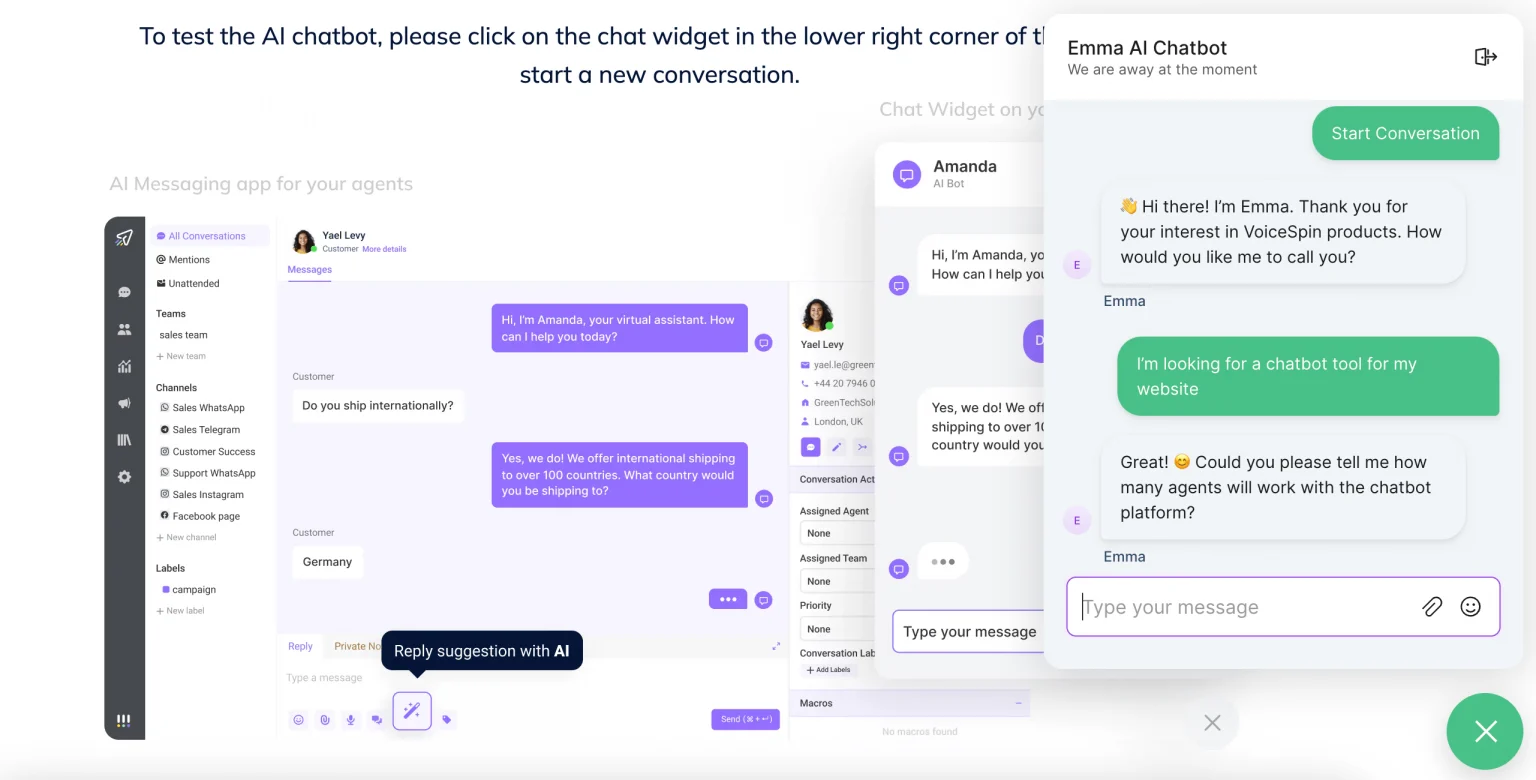
- AI chatbot: Provides multilingual, RAG-based support across digital channels, capable of automating lead qualification, appointment scheduling, and resolving customer requests without human intervention.
- AI auto dialer: Uses predictive dialing and intelligent lead-agent matching to optimize outbound call campaigns and improve conversion rates.
- AI speech analyzer: Monitors all calls for compliance, quality, and performance management, helping reduce risks and improve training outcomes.
- AI messaging: Centralizes communication across digital channels in a unified interface to deliver consistent customer experiences and improve engagement.
- Omnichannel support: Handles calls, SMS, messaging apps, and more from one platform, allowing seamless transitions between channels and consistent service delivery.
9. Squaretalk

Squaretalk is a cloud-based contact center platform that combines AI-driven automation with sales-focused communication tools. It supports both inbound and outbound use cases through voice and messaging channels and offers capabilities for real-time monitoring, CRM integration, and performance optimization across teams.
Key features include:
- Predictive dialer: Increases connection rates by automatically filtering out voicemails and busy signals while using local numbers in over 150 countries to improve answer rates.
- AI-powered insights: Analyzes customer interactions and agent activity to uncover patterns, optimize workflows, and guide decision-making.
- Integrated Webphone: Allows agents to manage calls directly from the browser, with features like saved contacts and speed dial for faster outreach.
- CRM integration: Connects with popular CRMs and business applications to streamline lead management and reduce manual data entry.
- Real-time monitoring: Enables supervisors to observe live agent activity, monitor performance, and make adjustments as needed.
- Scalable deployment: Supports quick onboarding of new agents and expansion into global markets with a cloud-native infrastructure and multilingual support.
10. Coperato

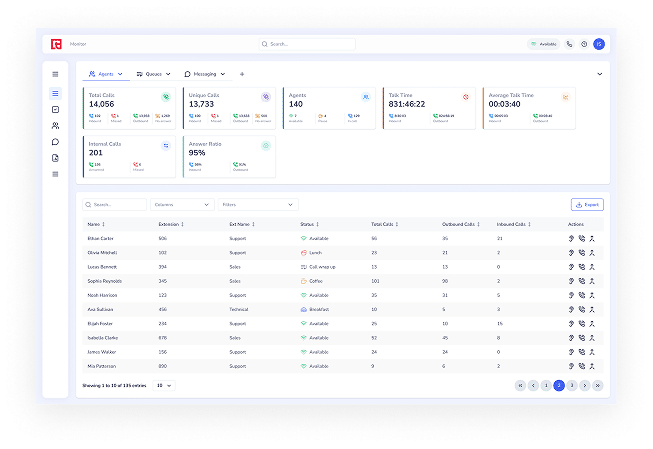
Coperato delivers a cloud-based VoIP contact center solution focused on improving operational efficiency and communication quality for sales, support, and service teams. With global VoIP coverage, CRM-ready integrations, and real-time monitoring, it supports scalable deployment and automation across inbound and outbound communication workflows.
Key features include:
- Call routing: Supports custom routing rules, automated distribution, and intelligent IVR menus to connect callers efficiently and reduce wait times.
- VoIP auto-dialers: Enables automated outbound campaigns to reduce agent idle time and increase connection rates, especially in sales-driven environments.
- Real-time monitoring and analytics: Provides visibility into call activity, agent performance, and customer interactions for better decision-making and quality control.
- CRM integrations: Connects with systems like Zoho, SugarCRM, and others to centralize customer data and simplify workflows across teams.
- Global VoIP coverage: Offers international local numbers and high-quality call routes to support localized communication and global expansion.
- Fast setup and scalability: Supports rapid onboarding and flexible configurations suitable for small businesses or enterprise-level contact centers.
- 24/7 customer support: Maintains round-the-clock assistance to ensure uninterrupted service and timely issue resolution.
11. Commpeak

CommPeak provides a cloud-based contact center platform with global communication capabilities, predictive dialing, and integrated messaging tools. Intended to support both inbound and outbound operations, it combines voice, SMS, and real-time analytics with secure infrastructure.
Key features include:
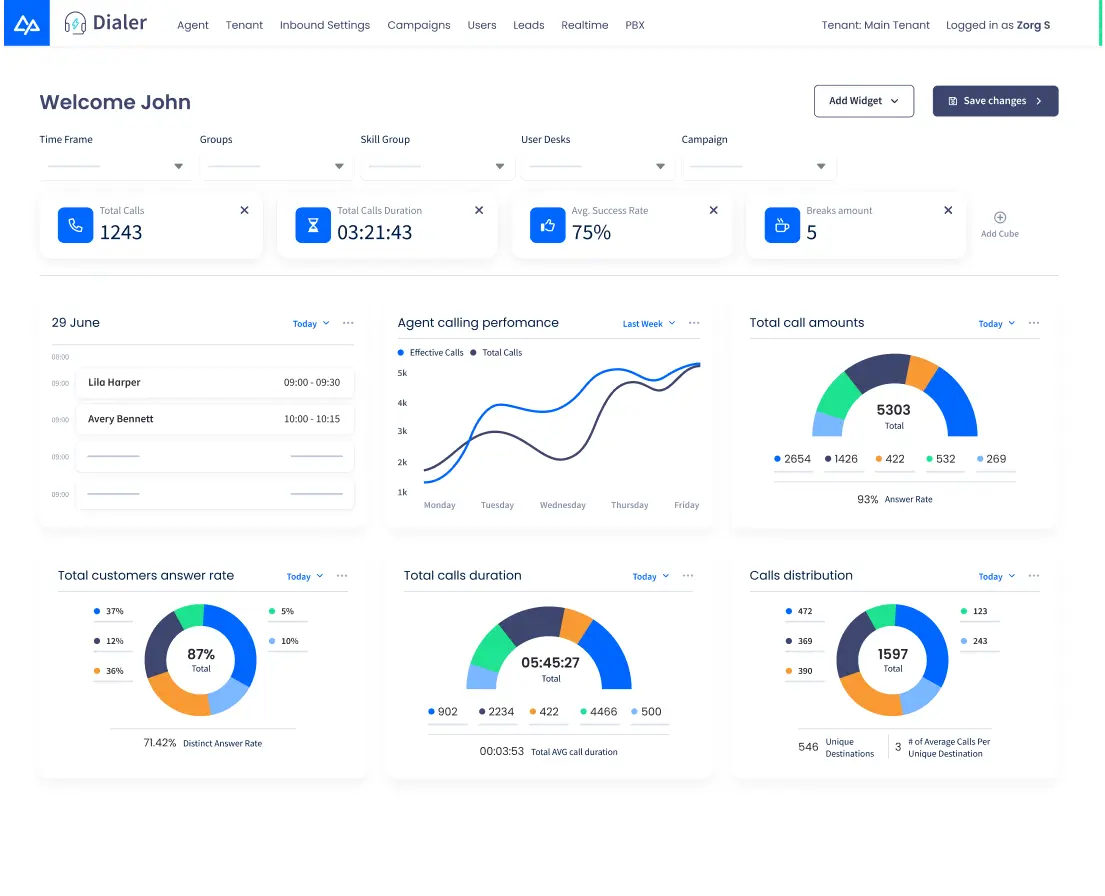
- Predictive dialer: Automates outbound calls to maximize agent productivity and improve lead conversion, with configurable rules to optimize call handling.
- Cloud PBX: Delivers a VoIP-based phone system to support global inbound and outbound calling with centralized control and scalability.
- Omnichannel messaging: Includes SMS campaign management via TextPeak, allowing teams to handle text conversations and outreach alongside voice channels.
- DID numbers and SIP trunking: Offers global VoIP connectivity with local numbers in over 75 countries and A–Z SIP termination for expanded market reach.
- Real-time monitoring and analytics: Provides dashboards and insights into agent performance, call outcomes, and operational metrics to support data-driven decision-making.
- Secure infrastructure: Ensures call data protection with encryption and international compliance standards for enterprise-grade security.
- CRM and app integrations: Connects with tools like Salesforce, HubSpot, Zapier, and Intercom to streamline workflows and enhance customer engagement.
Evaluating Cloud Contact Center Software
Matching Features to Business Requirements
Selecting cloud contact center software starts with aligning the platform’s capabilities to your organization’s operational needs and customer preferences. Begin by mapping out your required communication channels, integration points, security standards, compliance obligations, and reporting needs. Evaluate the software’s ability to deliver omnichannel experiences, support your industry-specific workflows, and empower agents with tools needed for high productivity.
Beyond feature checklists, involve stakeholders from IT, operations, and frontline staff in the evaluation process to uncover hidden requirements and ensure broad adoption. Pay close attention to the ease of configuration and user training resources provided by the vendor. The ability of the software to evolve with your business, such as adding channels, users, or features, should also factor heavily into your decision making.
Platform Scalability, Reliability, and SLAs
Scalability is crucial in a cloud contact center, especially if your business experiences fluctuations in customer interactions or seasonal spikes. Ensure the platform supports quick scaling of agent seats, channel capacity, and new features without major disruptions. Examine whether the provider operates in multiple data centers for geographic redundancy and failover support, which is important for maintaining uptime and service continuity.
Service level agreements (SLAs) offered by vendors should be examined closely. Look for guarantees regarding uptime, response times for support, and resolution of critical issues. Ask providers about their historical performance metrics and references from organizations of similar size or in similar industries. Reliable cloud contact center software should reduce operational risk while keeping long-term costs predictable.
Pricing Models and Cost Evaluation
Cloud contact center software providers typically offer various pricing models, such as per-user, per-minute, or usage-based plans. Before committing, carefully analyze your anticipated volume of calls, digital interactions, and agent seats to project total costs. Consider all potential expenses, including integration charges, premium feature access, and ongoing support fees. It’s important to calculate the total cost of ownership rather than just the monthly subscription rate.
Also, investigate how easily you can scale service up or down without incurring penalties or excess costs—flexibility is a significant benefit of cloud models. Ask for transparent breakdowns of included and optional services, and beware of hidden fees or restrictive contract terms. A clear understanding of pricing ensures you select a solution aligned not just to budget constraints, but also to planned business growth and future requirements.
Security, Compliance, and Data Governance Criteria
Security is non-negotiable when it comes to customer interactions and sensitive data. Ensure the cloud contact center software meets industry-standard security protocols, such as encryption for data in transit and at rest, robust access controls, and secure authentication processes. Compliance requirements, like PCI DSS, HIPAA, or GDPR, should be validated, with documentation and audit support available upon request. Data residency and sovereignty policies may also be important if operating internationally.
Vendors should provide clear data governance policies covering retention, deletion, data subject access, and incident response. Confirm that third-party security assessments and penetration tests are performed regularly. Assessing a vendor’s compliance certifications and understanding how they handle your organization’s data helps protect your reputation and reduces regulatory risk.
Evaluation of Vendor Ecosystem and Support
The ecosystem of a cloud contact center solution encompasses integrations, developer communities, third-party apps, and partner services that can extend the product’s value. Confirm that the vendor offers open APIs or pre-built connectors for your existing applications and workflows. A marketplace with vetted add-ons and integration options reduces time-to-value and supports rapid customization.
Support is another critical consideration: assess the quality, speed, and availability of vendor support channels. Look for transparent escalation processes, dedicated account management, and community or self-service resources. A vendor committed to customer success and backed by a vibrant ecosystem will help your organization adapt to changing requirements, maximize ROI, and ensure the longevity of the solution.
Conclusion
Cloud contact center software gives organizations a flexible, scalable foundation for managing customer interactions across channels without the overhead of traditional on-premise systems. By centralizing communication, integrating with core business applications, and leveraging AI-driven automation, these platforms streamline operations and improve service consistency. Evaluating providers through the lens of features, integrations, reliability, cost structure, and compliance helps ensure the chosen solution aligns with operational goals and future growth.