









Financial services messaging is mature for transactions and broken for growth. New survey data reveals why 93% of fintechs, lenders, and payment providers are stuck and what the ones moving fastest are doing differently.
Fintechs, payment providers, lenders, and trading platforms have spent the better part of two decades building a messaging infrastructure around security and transactions. One time passwords, transaction confirmations, and payment reminders arrive like clockwork, enabling fraud prevention and encouraging on-time payments.
However, these companies are discovering that their customers expect more. In addition to payment confirmations, customers want to know if they qualify for a better rate, see the latest financial services offers from their providers, and be kept in the loop throughout a loan application process.
The existing infrastructure, which relies heavily on SMS and email, was never designed to share documents, schedule appointments, and deliver promotional videos with the latest offering. The result is a communication program lacking the tools needed to effectively communicate with today’s customer.
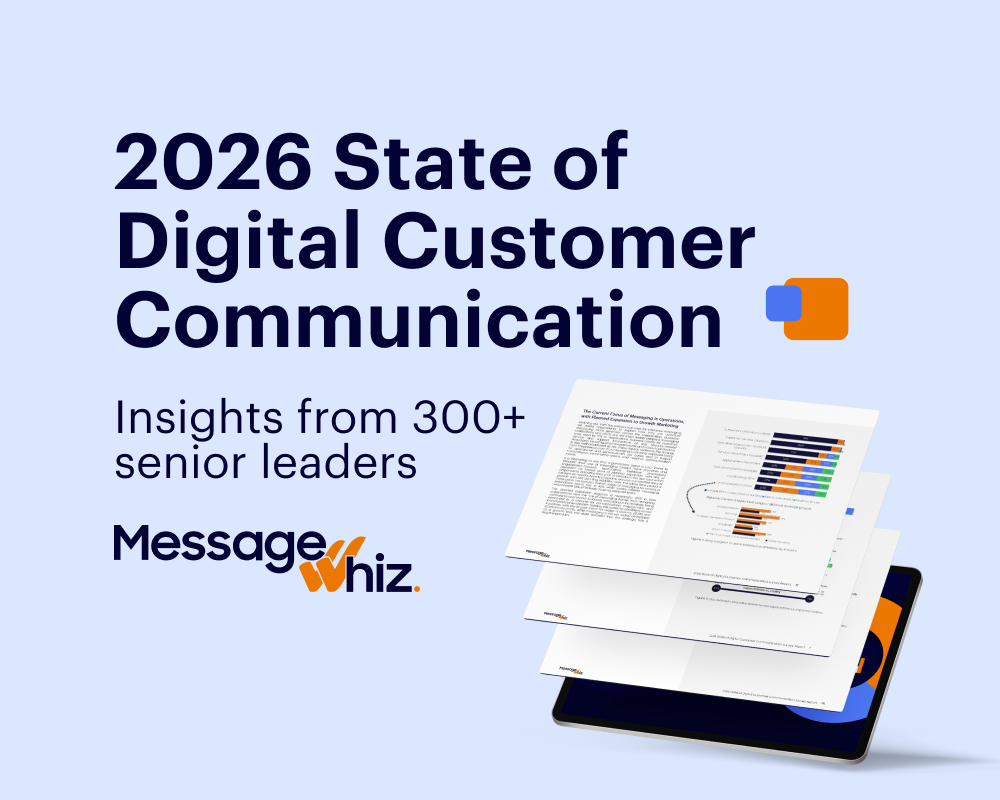
The 2026 State of Digital Customer Communication Survey which included financial services respondents from fintechs, payment providers, lenders, and trading platforms quantifies this situation precisely. A double click on the financial services data, in this report,reveals three structural gaps that explain why growth messaging has stalled, and what closing them actually requires.

Why is Omnichannel Communication Still so Difficult to Execute in Financial Services?
Omnichannel messaging holds the key to closing the communication gap between financial services operators and their customers. Communication channels like WhatsApp, RCS, Viber, and Telegram enable interactive messages, document sharing, video sharing, and other marketing tools that would deliver the experience customers crave. They complement the basic capabilities of SMS, which is excellent at delivering one time passwords and alerts.
However, it presents the second gap facing these providers.
According to the 2026 State of Digital Customer Communication Survey, 98% of industry respondents said omnichannel communications was an important piece of their growth strategy. That’s no surprise. Despite these intentions, only 40% are currently using WhatsApp, and another 20% are using RCS.
What Does Poor CRM Integration Actually Cost Financial Services Companies?
Only 6% of financial services companies have fully integrated their messaging program with their CRM. This actually hampers their ability to automate and send personalized messages, on the customers’ preferred channel in real time.
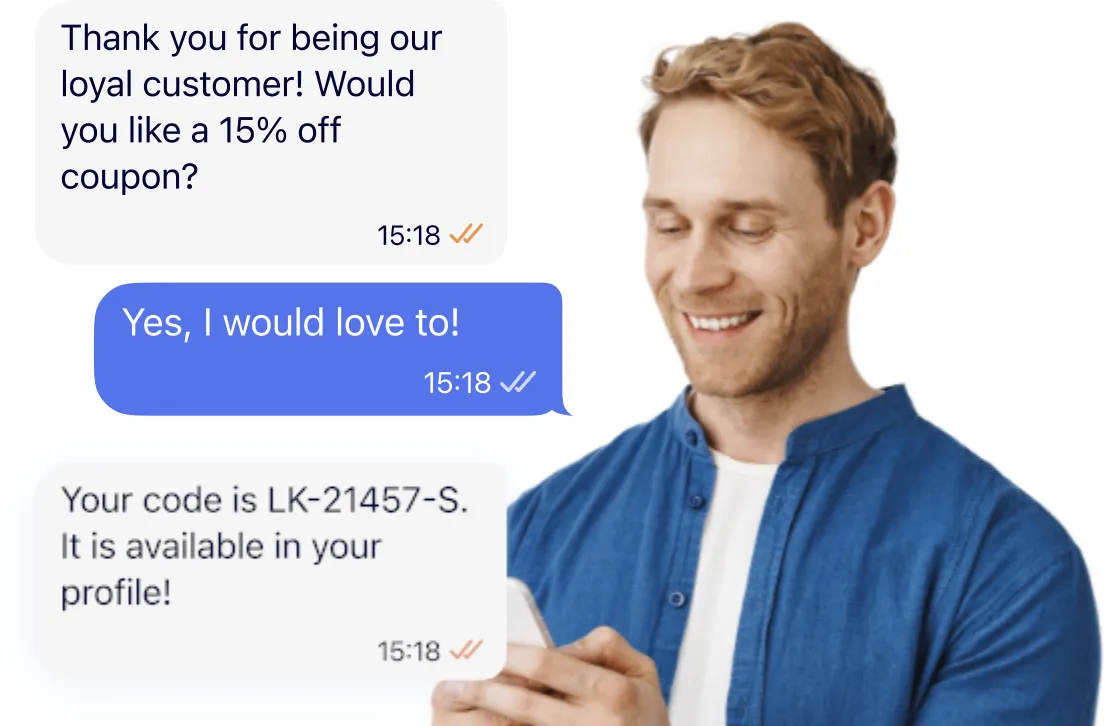
Without CRM integration, messages cannot be triggered by real customer behavior. A borrower who just made their third consecutive on-time payment does not receive an automated refinancing offer, they receive the same generic blast sent to every customer on the list. A trader who crosses a portfolio threshold does not get a timely, relevant alert, they get the same weekly newsletter. The moment passes. The revenue opportunity disappears.
The second issue is lack of orchestration between communication systems. 60% of financial services companies said they can’t manage conversations across platforms. This lack of a 360-degree view of communications inhibits automation and leads to customer frustrations, who may have already responded to their provider on one channel, only to find that they need to recap previous conversations every time they speak to a service rep.
The survey data tells a clear story: the gap between operational messaging and growth messaging.
| Use Case | Currently Using | Planning to Add in Next Six Months |
| Customer notifications and alerts | 85% | 13% |
| Customer service and support | 85% | 12% |
| OTPs and account security | 72% | 13% |
| Surveys and feedback | 53% | 23% |
| Individual promotions | 30% | 52% |
| Appointment reminders | 25% | 28% |
| Loyalty programs | 27% | 18% |
The top three rows represent a mature, well-executed capability. Alerts fire when they need to. OTPs arrive in seconds. Support channels are in place. These are table stakes in 2026.
The bottom four rows tell the growth story. Individual promotions, appointment reminders, loyalty programs, and feedback collection are where financial services messaging is heading. None of them are fully deployed yet, and require infrastructure upgrades and CRM integrations for companies to execute properly at scale. The most significant shift in the table is individual promotions.
- Only 30% of financial services companies are using individual promotions today
- 52% plan to add individual promotions in the next six months.
No other use case comes close to that level of near-term intent.
What Does Messaging Operational Readiness Look Like in Financial Services?
A CPaaS (Communications Platform as a Service) platform that is operationally ready for financial services growth is not just a message delivery system. It is a customer intelligence layer connected to the systems that know what customers are doing right now. Four capabilities define the difference between a platform built for transactions and one built for growth:
1. Real-Time CRM Data Sync
When a customer takes an action; completing a payment, triggering a loan threshold, crossing a balance milestone, an operationally ready platform responds immediately. Not the next morning. Not on the next campaign send date. The trigger happens, and the message fires within seconds.
2. Behavior-Based Message Triggers
52% of financial services companies plan to add individual promotions within six months. That intent requires a live connection between customer behavior and outbound messaging. Without it, those “personalized promotions” are just bulk messages with a different label.
3. Predictive AI Integration
67% of financial services respondents rank predictive analytics as their top AI priority, the highest-rated AI capability in the industry, ahead of smart routing, chatbots, and message generation. They are not asking for AI that improves delivery rates. They want AI that tells them which customer is approaching a repayment moment, which trader is likely to increase their position, and which borrower’s behavior signals a retention risk before they actually leave. Predictive AI without CRM integration is just a faster way to send the same messages.
4. Closed-Loop Analytics Across Channels
Delivery rates, click-through rates, and conversion data need to feed directly back into routing decisions and message variations. A platform integrated with business systems does this automatically. One that is not is reliant on manual reporting cycles that are always too slow for financial services timelines.
Turn Messaging Into a Competitive Advantage
The financial services companies that will pull ahead in the next one to two years are not the ones with the most channels. They are the ones that connect their messaging to their customer data and use that connection to move beyond alerts and confirmations into communication that actually drives growth.
MessageWhiz helps financial services companies make that shift. From OTP delivery and real-time alerts to CRM-connected individual promotions, appointment reminders, and two-way conversations across WhatsApp, RCS, and Telegram, it is a single platform built for both the reactive and proactive sides of financial services communication.
To see how the rest of the industry is approaching this challenge, download the 2026 Financial Services Messaging Report.
FAQ
What is financial services messaging?
Financial services messaging refers to automated and triggered customer communications sent by fintechs, payment providers, lenders, and trading platforms across channels like SMS, WhatsApp, RCS, and email. Common use cases include OTPs, payment reminders, fraud alerts, account notifications, appointment reminders, and personalized loan or trading offers.
What messaging channels work best for financial services?
SMS and email are the most widely used today, but WhatsApp, RCS, and Telegram are the channels financial services companies most commonly identify as missing from their stack. WhatsApp offers high visibility and two-way communication. RCS adds verified sender identity to the SMS experience. Telegram reaches users who expect real-time, high-priority updates.
Why do financial services companies struggle with omnichannel messaging?
The most common barrier is CRM integration. When messaging platforms are not connected to customer data systems, real-time, behavior-driven messaging is not possible. 93% of financial services companies in the 2026 State of Digital Customer Communication Survey reported incomplete integration between their messaging platform and their CRM.
What is the difference between transactional and promotional messaging in financial services?
Transactional messaging covers confirmations, alerts, OTPs, and notifications triggered by a specific customer action or system event. Promotional messaging covers offers, reminders, and personalized communications designed to drive a customer toward a desired behavior. Both rely on the same infrastructure, but promotional messaging requires a live connection to customer data to be effective.
How can financial services companies improve messaging personalization?
Personalization in financial services messaging starts with CRM integration. When customer data flows in real time to the messaging platform, messages can be triggered by actual customer behavior rather than scheduled campaigns. A borrower who makes an on-time payment can receive a refinancing prompt within seconds. A trader who hits a portfolio threshold receives an alert they set themselves. The message becomes relevant because it is tied to a real moment, not a broadcast schedule.